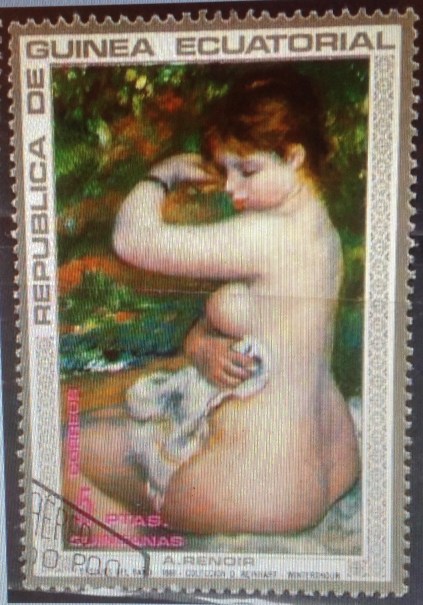
 Contemplate, dear reader, this image of a (cancelled-to-order) stamp, nominally from Equatorial Guinea, a tiny sovereign state on the west coast of Africa that has been grievously plundered and misruled by its leaders, both under Portuguese dominion and in the half-century since independence. The stamp is pretty enough — though the full-color reproduction of an Auguste Renoir painting of a very naked, very pink, big-bosomed young woman seems a bit, well, over the top. Can you seriously imagine a beleaguered citizen of this outlaw African state finding one of these in her or his local post office, for use on outgoing mail? Not likely. Remember all those rules set by the Universal Postal Union about what constitutes a legitimate stamp? (See blog post, September 2017.) Well, this stamp breaks most of those rules. It certainly has nothing to do with Equatorial Guinea. It’s doubtful it ever went on sale in the country, or if so was widely available for purchase. It is by no possible rhetorical stretch an emblem of Equatorial Guinean culture or sovereignty.
 Ditto with the second stamp portrayed here — an image of Jiminy Cricket, the animated character from the Disney film “Pinocchio,” painting an Easter egg. Huh? Tell me why this is anything but a crass effort on the part of “Grenada Grenadines” (or better put, the philatelic agents) to cash in on the market for topical stamps. I wonder if there is an envelope bearing this stamp that actually went through the mail …
There was a time, dear readers, when most stamps were legal. Sure, there were plenty of Cinderella fantasy stamps out there, indeed since the very beginning of stamps. (Read about the satirical “Mulready” covers of 1841, in the blog post of August 2017, “The First Cinderellas.”) But these only masqueraded as postage stamps. Propaganda labels in wartime were something else, as were forgeries. For the most part, stamps were produced under government supervision, readily available at post offices for citizens to buy and use to send mail. The world of extra-legal Cinderellas was pretty tame and innocent — at least until the 1960s.
As late as 1969, my copy of the Scott standard stamp catalogue listed no “illegals” or “undocumented” or “non-standard” items. Neither did my 1971 catalogue. But by 1977 there was a short section, “For the Record,” which listed “items” that “appeared on the market in the 1960s and 1970s, and have not been listed in the Scott Standard Catalogue.”
There followed 14 pages of fine print listing hundreds of stamps put out under the names of real countries, or at least real territories, as follows:
Aden (three states), Ajman (Manama), Anguilla, Bangladesh, Barbuda, Biafra, Cyprus (Turkish mail), Dubai, Fujeira, Grenada (Grenadines), Jordan, Qatar, Ras al Khaima, St.Vincent (Grenadines), Sharjah (Khor Fakkan), and Umm al Qiwain.
A few comments on this list:
 ** The spurious issue from Bangladesh listed in the catalogue came from 1974. It was a suspiciously anodyne souvenir sheet and set of four stamps honoring the Universal
Postal Union. At right is an example from the set, depicting what appears to be a postal runner from Bangladesh. The scene would argue in favor of this being a legitimate stamp promoting local folkways and sovereignty. Apparently not.
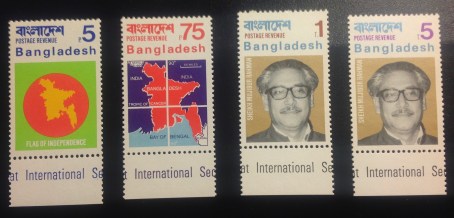 Also interesting is one of the first sets issued after East Pakistan broke away from West Pakistan in 1971 and became Bangladesh. The set of 15 variously depicts a flag, a map and a portrait of Bangladesh’s first president, Sheikh Mujibur Rahman. The catalogue bluntly notes that the set “was rejected by Bangladesh officials and not issued. Bangladesh representatives in England released these stamps, which were not valid, on
  Feb. 1, 1972.” The same designs appear in the first official set from Bangladesh (examples at right) — though the nation’s name is spelled in two words — Bangla and Desh. I have not learned why the other set was rejected, and illegal. I admit I have it in my collection, though. I bought it for a couple of bucks at a stamp show. I wonder if the violent and bloody birth pangs of Bangladesh had something to do with this mixup. Peace had barely been restored and the Sheikh was released from solitary confinement only in January, a month before the spurious stamps were issued. Things never really settled down under Sheikh Mujib — earnest, bespectacled, charismatic and a dogmatic socialist. In 1975, he and members of his family were gunned down by army officers during a coup that returned the region to benighted martial law and years of unrest.
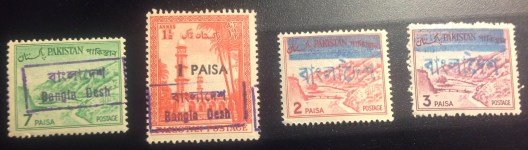 While we’re on the subject of Bangladesh, how about these provisional overprints of Pakistani

- Here is a little bonus, above: This is actually Scott No. 1 from Bangladesh, a stamp I just found on the Internet. It appears to be genuine, if crude — consider, for example the cancellation, which looks authentic, not cancelled-to-order. It is offered online for $5 — a considerable sum for such a stamp these days
stamps? The examples illustrated here are from my collection. How could I resist spending a few bucks to acquire evidence of the first philatelic yowls from a new-born nation? The impression is that these stamps were overprinted — crudely, often by hand stamp — for use during the chaotic time between East Pakistan’s demise and the formal issuing of Bangladesh postage stamps. But if so, where are the envelopes displaying cancelled copies of these overprints? Until I find such evidence, I am inclined to dismiss or at least quarantine these examples as illegals, Cinderellas, or both.

Here is a stamp from Biafra’s first definitive set, which of course is simply a Nigerian stamp with the name crossed out, overprinted “Sovereign Biafra” with the Biafran coat of arms — a peculiarly British holdover custom and barely visible in this crude production.
** Stamps from Biafra, the self-declared republic (1968-71) carved out of the Igbo region of southeastern Nigeria, are in a special category — with ephemeral philatelic companions such as Katanga, South Kasai and other states whose claims to sovereignty never quite made it past global review — but who still managed to produce stamps. (For more on Katanga and other breakaways in the Congo, see the blog post “10 Interesting Anecdotes about the Congo,” March 2017.)
I don’t believe the UPU recognized Biafra’s stamps. If you find a cover with cancelled Biafra stamps, save it!

Such was the chaos in Biafra that philatelic errors quickly appeared — like this example from the definitive series where the printers neglected to cross out “Nigeria.” Errors like this still are likely to command double-digit prices — this image is from the Internet, not my collection.

Eventually, Biafra got around to printing its own stamps — probably in England, Germany or somewhere else. Included in these spurious issues was the obligatory butterfly set — a topical issue which seems to raise a red flag for potential illegality, for some reason. Not that Biafra wasn’t still a nation struggling to make its way; I’m just saying that the Universal Postal Union never officially recognized stamps from Biafra. There are some suspicious signs about this set. First off, how many Biafran letter-writers need a 5 shilling stamp, or even a 2/6 stamp? Alternately, if the currency was unrealistically inflated, what good is a 4 pence stamp? Having never seen these or other Biafran stamps offered as cancelled copies from envelopes that went through the mail, I am inclined to side with the UPU and declare these stamps illegal. Sorry, Biafra. (I also confess I have a nearly complete Biafra collection, which may be worth a couple hundred dollars — purely a philatelic collecting oddity, but there you have it.)

These may be the rarest stamps from Biafra, if anyone cares. Someone must, because they are offered online at up to $20 or more for the pair. The stamps honor “Biafra – France Friendship.” They are overprints on the original overprints of Nigerian stamps. One seller describes “the scarce and rarely seen 2-value set overprinted ‘Biafra-France Friendship’ and surcharged 5 shillings and 1 pound respectively.” The seller adds: “Scott does not list this as a regular postal issue but does mention it and places a value of $27.50. … Very difficult to find, and I suspect considerably undervalued.” The seller offered it for $22.95. I still haven’t summoned the reckless abandon to throw $20-plus out there and catch these stamps, reel them in to make by Biafra collection complete. But writing that last sentence strengthens my resolve.…

Biafra issued this startling souvenir sheet to mark its second anniversary of independence. Some anniversary. One could question the use of somber, malnourished, even starving children to celebrate sovereignty, or celebrate anything but the regime’s failure to prevent the misery and death of its people. Maybe the goal was to garner international sympathy (and money). This stamp, and a subsequent re-issue of the sheet overprinted, “Save Biafra!” bear mute witness to tragedy, not freedom.

I don’t mean to put The Palestinian Authority in the same basket as Biafra and other failed states. But it somehow fits at this point in the narrative of illegal stamps, because The Palestinian National Authority (PA? TPA? PNA? TPNA?) is still a work-in-progress. Consider for example: The above stamps were issued in 1994, after the historic Oslo Accords. The agreement established the PA as a governing entity, though of a “state” that barely existed — and exists today, some would argue, more in wishes and dreams than in reality. Consider, next, the issue below:

This souvenir sheet, released 18 years after those first stamps above, announces “A State is Born” — the state of Palestine. It depicts PA President Mahmoud Abbas brandishing a document — presumably the UN’s recognition of the PA as a non-member observer state. Before, I guess the PA wasn’t a state, just an “authority.” After 2012 it’s been a full-fledged … er … about that “two-state solution” — I thought that was still being negotiated, if not all but abandoned by both Israel and the PA. How could there be a Palestinian state already? If so, can we celebrate the end of this long, wearying stand-off?

Above is No. 1 from Fujeira. It looks like a legitimate enough stamp, featuring the ruler and a native fowl. But then look at No. 1 from Umm al Quiwain, below. If these are two different states, why do the stamps look like they are from the same set? Are they legal? I ask you …
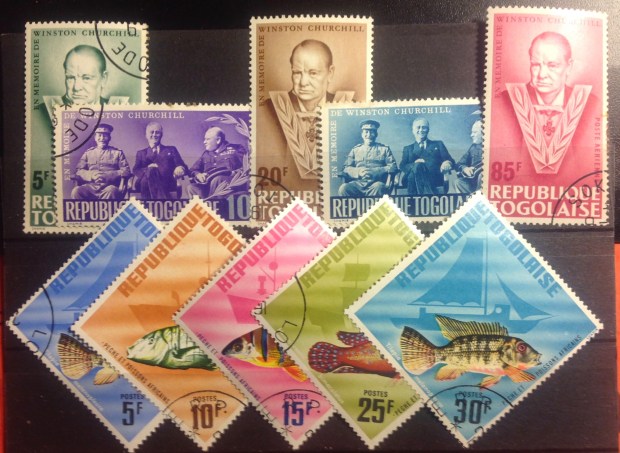
** Notice that some of the philatelic phelons putting out illegal stamps have issued legal stamps right along — like Qatar and Jordan. And what about those seven Arab Trucial states that combined into United Arab Emirates in 1972? (Want a list? They are Fujeira, Ras al Khaima, Umm al Quiwain, Abu Dhabi, Dubai, Sharjah and Ajman.) The UAE began issuing legal postage stamps, though entrepreneurial printers had been churning out philately for years for Fujeira, Ras al Khaima, Umm al Quiwain and others. Spurious and illegal! warns Scott. Beware of all 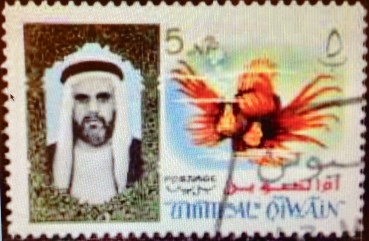 those sets honoring Winston Churchill and JFK, the Olympics, famous artists, butterflies and the rest. My Scott catalogue wouldn’t even show pictures of these “non-standard” non-stamps.

Above is part of a set from Fujeira honoring John F. Kennedy. Below are stamps from a JFK memorial set from Umm al Quiwain. Two sets, two postal authorities. Two countries? Who’s kidding whom?

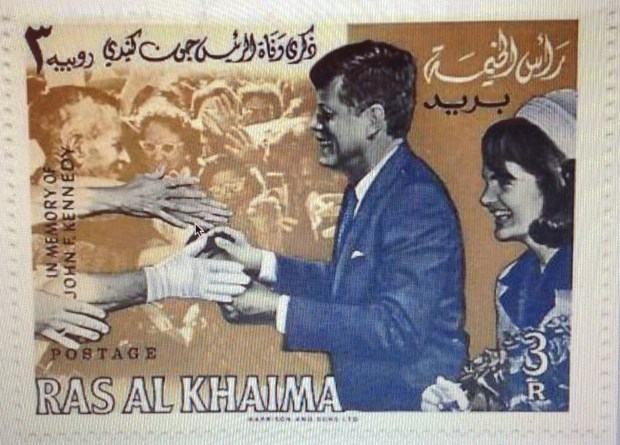
Oh yes, here’s another JFK memorial stamp, this one from Ras al Khaima. Everyone got in on the JFK memorial act, it seems. According to the UPU and Scott, all these stamps are non-standard, spurious, illegal. Get the picture?
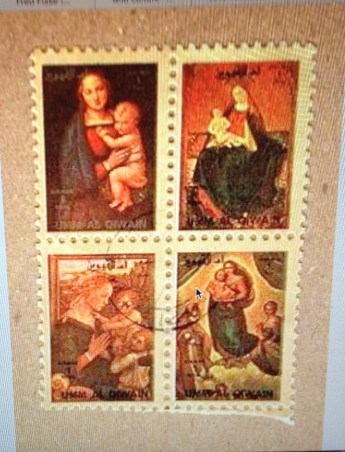
 No need to play this up, but is that really a succession of Catholic-approved Pietas in these art stamps from Umm al Quiwain (below) ? It’s downright ecumenical of this Muslim sheikdom to honor Christian icons on its stamps. What next — a celebration of Jewish holidays? At right is the obligatory butterfly stamp, this one from Ras al Khaima, more or less announcing that this stamp, like the others, is pretty much illegal.

No. 1 from Grenadines of St. Vincent, above, features a stamp from St. Vincent, cleverly overprinted above the name with the words “Grenadines of” (though it does deface the image of the heron). Soon enough, this self-declared stamp issuing entity would come out with its own definitives (see example below) — which doesn’t make them any less illegal …
** I have to add at this point: The stamps combining “Grenada” and “St. Vincent” and “Grenadines” inject fresh Caribbean zest into the fusty realm of Cinderellas, don’t you think? Care for a grenadine? Don’t mind if I do! But a stamp from Union Island, Bequia or Mustique? I’ll pass …
Grenada and St. Vincent are surrounded by a chain of islands known as the Grenadines. St. Vincent claims the Grenadines in its neighborhood — Bequia, Union Island and Mustique, all stamp-issuing entities. The islands in Grenada’s orbit include Carriacou, Petite Martinique, Ronde Island, Caille  Island, Diamond Island, Large Island,
Saline Island and Frigate Island. Thus far, there is just one overall stamp-issuing authority for “Grenada Grenadines.” While some of these islands are unpopulated, how long before they, too, become stamp-issuing entities? I shudder to think …

Here is No. 1 from Grenada Grenadines — honoring the 1973 nuptials of Britain’s Princess Anne and Capt. Mark Phillips. Their marriage lasted not quite 20 years, but the stamp — emblazoned with the crown of Elizabeth II, but still apparently illegal — will endure …

Now we come to Bequia, a charming island in the Grenadines of St. Vincent chain. Along with Mustique and Union Island, Bequia began issuing stamps years ago — none of them UPU-approved. And just look at the themes — a U.S. 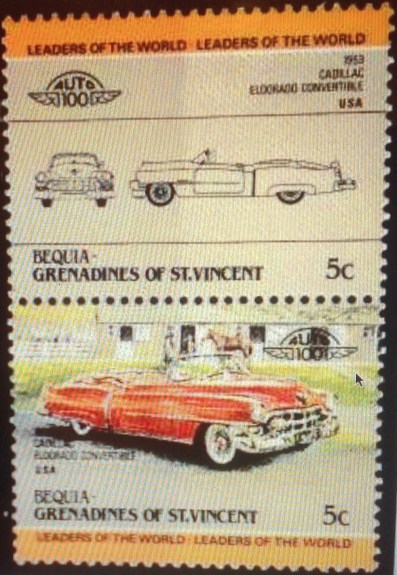 locomotive, a Cadillac … what in the world does any of this have to do with Bequia? As for the pretty butterfly stamps (see below), well, don’t they speak for themselves by now?


The 500th anniversary of Michelangelos’s birth came and went, without philatelic recognition from the United States or most other nations. For some reason, Grenada Grenadines thought it necessary and appropriate to mark the event with this stamp (right). It may have been a hit with topical collectors, but you need more than stamp tongs to grasp the connection between the long-dead Italian artist and the Grenada Grenadines — Carriacou, Saline Island, Frigate Island or the rest.
My next catalogue under review is from 1986, countries A-F. In “For the Record,” it supplies a rather short list of countries whose non-standard items appeared on the stamp market in the 1960s and 1970s: Afghanistan, Bhutan, Cambodia (Khmer), Cameroun, Chad, Comoro Islands, Congo People’s Republic, Dahomey, Ecuador, Equatorial Guinea.
Some notes on this list:

Why on Earth would Cambodia issue a stamp commemorating Interpol in 1973, when it was fighting for its life? That same year the philatelic agents honored Copernicus (see below), presumably in an effort to make a few bucks from the topical market.
** The first thing that struck me was “Cambodia (Khmer).” Were these stamps from the killing fields outside Phnom Penh? I turned to the appropriate pages in the catalogue, and found stamps issued between 1972, in the midst of the fighting, through April 1975 — the very month the Khmer Rouge entered Phnom Penh. These non-standard stamps were issued while Gen. Lon Mol was trying to hold Cambodia together in the rogue state known as the “Khmer Republic.” While southeast Asia was being bombed and bloodied, the stamps blithely paid tribute to the coming summer Olympics, the UPU centenary, Copernicus — nothing else going on around here, folks. Presumably these sets (again, no pictures supplied in the catalogue) were manufactured to be marketed to collectors, somehow. I guess it worked, somewhat. I do wonder who would want these questionable stamps from Cambodia?

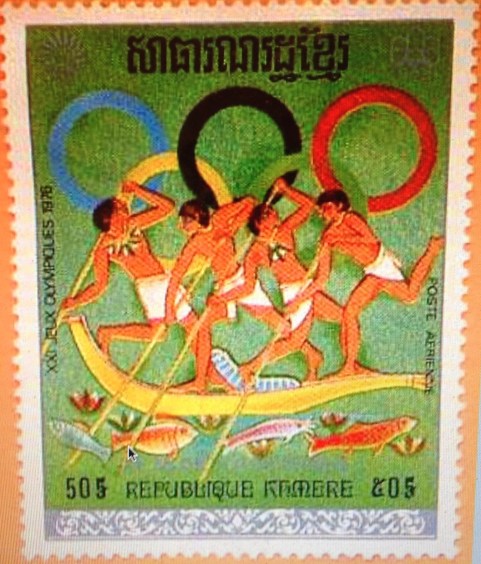
The Cambodian stamp above looks forward to the 1976 Olympic games — by which time the Khmer Rouge had sent the nation careening into chaos and genocide. (Images from the Internet.)
And by the way, what does “Khmer” mean, philatelically, in relation to the fanatical regime that came to power in 1975? Did the blood-crazed Khmer Rouge ever get around to putting out stamps during their three years of nightmarish rule and carnage? Have I asked enough questions?
Now for some answers. The “Khmer Republic” was the ethnic and civic fig leaf for Lon Nol’s military dictatorship — short-lived, as it turned out ª1973-5). As for Khmer Rouge philately, after 1975, the Swiss blogger Victor Manta sounds authoritative when he writes:
“Many people have wondered what happened to the postal system in Cambodia after the Khmer Route came to power in mid-April 1975 and subsequently renamed the country ‘Democratic Kampuchea.’ With Pol Pot at the center of power, the ultra-Maoist regime is thought by many to have caused the death of as many as two to tree million Cambodians before they were overthrown in late 1978 by Vietnamese military force.
“It is generally accepted that no postage stamps were issued by the Government of Democratic Kampuchea for domestic or international use during their control over Cambodian territory from 1975 to late 1978. The Ministry of Post and Telecommunications was ‘disbanded’ by the KR and no official of Democratic Kampuchea was assigned to oversee the tasks of post and communications during those years of abject terror.
“Collectors of Cambodian philately will be only too familiar with the gap in stamp catalogues for this period. Stanley Gibbons includes three small paragraphs headed, ‘Democratic Kampuchea,’ as follows: ‘… the discontinuance of postal and telegraphic services. In these circumstances no stamps were issued. Five pictorial stamps inscribed “Kampuchea” without indication of currency were publicized early in 1978. If they exist their status would be propaganda labels.’ (2004) …
“However, written domestic communications did take place in Democratic Kampuchea. Such correspondence was, once again, limited to the senior hierarchy of the Khmer Rouge. Written communications were hand-carried and no postmark or postage stamp was necessary, nor used, as far as is known at present.
“Communications from Democratic Kampuchea to any person or agency outside of the country was only undertaken, as far as is known at present, by Pol Pot, Khieu Samphan and Ieng Sary. No other people within the country were allowed to enter into any form of communication with the outside world.”
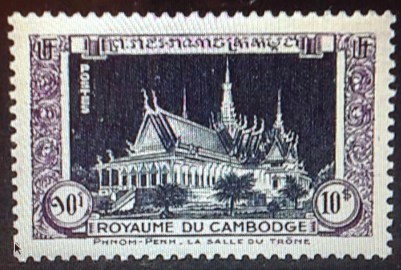 There was a time when Cambodia issued some of the world’s most beautiful stamps — delicate works of art that combined expert engraving, rich and subtle coloring, and arresting subjects. Here are some I captured in images from the Internet:


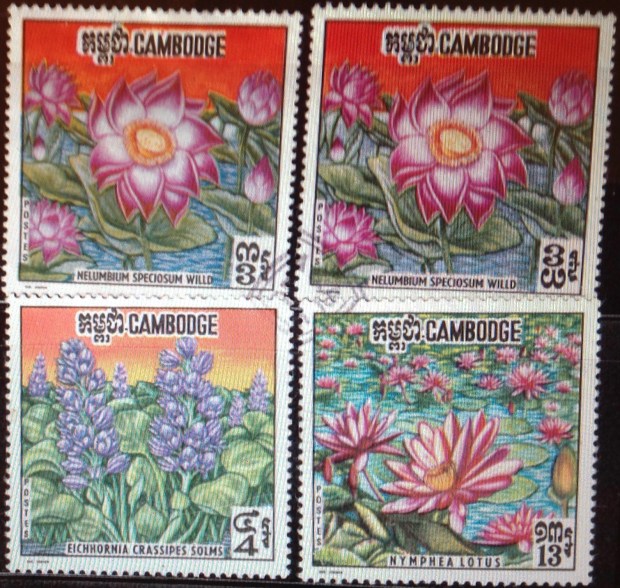


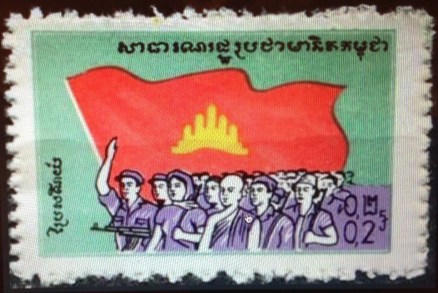
Here is a stamp issued for use in Cambodia during the Vietnamese occupation. I guess that makes it legal, if you accept Vietnam’s occupation as legal. (I give Vietnam credit for saving the country from the Khmer Rouge.) Whether legal or not, you would hardly say this stamp is beautiful, or finely made. A crude product, in my opinion, right down to the ragged perforations; nothing like the artistry of those old Cambodian beauties …
It is a small philatelic tragedy within the immense Cambodian tragedy that this stamp-producing tradition was lost entirely during the terrible years of Khmer Rouge misrule, followed by the indifferent philatelic efforts of Vietnam as caretaker of the “Democratic Republic of Kampuchea.” Today, 40 years after the Khmer Rouge were driven out of Phnom Penh, with the Vietnamese long gone as well, Cambodia still struggles to recover its philatelic equilibrium, and probably much else beyond that.

Above is Bhutan No. 1, which features a sketchy drawing of a postal runner navigating a snowy, mountainous path — quite genuine-looking, if you ask me. The stamp with the image of a tiger (below) looks like a definitive. It is listed as cancelled-to-order, which makes it only semi-legal because it was never postally used. Why are these stamps deemed spurious? Bhutan is a real country, a member of the United Nations. It is landlocked, one of the most sparsely populated nations on Earth. My guess is that Bhutan became a stamp mill — about which more anon.
** I wonder if it strikes you, as it does me, that the countries either exploiting or implicated in illegal stamp production seem to be among the world’s … sketchiest states. Bhutan? Equatorial Guinea? The Khmer Republic? I wouldn’t want my homeland to be on that list.

Which brings us back to Equatorial Guinea, one of whose stamps illustrated the opening of this essay. Before wrapping up my narrative, let me share some info from Wikipedia about the last 20 years of Equatorial Guinea’s history:

Sure, this team of U.S. astronauts is worth celebrating. But by Equatorial Guinea? While stamp agents were peddling the item to the global stamp market for topicals, the corrupt regime of President Teodoro Obiang Nguema Mbasogo was stealing the nation’s rich resources. The people still live in misery, half the population without access to safe water. Surely President Nguema — who somehow has acquired a net worth of $600 million during his 30-plus years in power — and his equally predatory cohort had other things to think about than honoring U.S. astronauts. Perhaps they figured gaudy labels like this would serve as a distraction from their dastardly rule.
“… Since the mid-1990s, Equatorial Guinea has become one of sub-Saharan Africa‘s largest oil producers. It is the richest country per capita in Africa, and its gross domestic product … per capita ranks 43rd in the world; However, the wealth is distributed extremely unevenly and few people have benefited from the oil riches. The country ranks 135th on the UN’s 2016 Human Development Index. The UN says that less than half of the population has access to clean drinking water and that 20% of children die before reaching the age of five.
“The country’s authoritarian government has one of the worst human rights records in the world, consistently ranking among the ‘worst of the worst’ in Freedom House‘s annual survey of political and civil rights. Reporters Without Borders ranks President Teodoro Obiang Nguema Mbasogo among its ‘predators’ of press freedom. Human trafficking is a significant problem; the 2012 U.S.Trafficking in Persons Report stated that Equatorial Guinea ‘is a source and destination for women and children subjected to forced labor and FC (sic) sex trafficking.’ The report rates Equatorial Guinea as a government that does not fully comply with minimum standards and is not making significant efforts to do so.”
My last catalogue at hand is from 1997. (I apologize for not consulting more recent catalogues, but for the moment, I think this one will do.) The 1997 Scott catalogue has no “For the Record” section at all.
This does not mean that the Universal Postal Union folks successfully cracked down on illegal stamps, so that today, 20-plus years later, those irritating decoys and impostors are nothing more than a historical nuisance. Sorry, folks.
More likely what it means is that the stream of bogus stamps to entice collectors to part with their money has become a flood I don’t blame the editors at Scott if they no longer feel inclined, obligated or generally in the mood to confront the whole distasteful topic. I can hardly stand to go on myself. Just one more part, soon to come, and then I’ll be done and eager to move on to uplifting and interesting stories about stamps — legal stamps!
TO BE CONTINUED


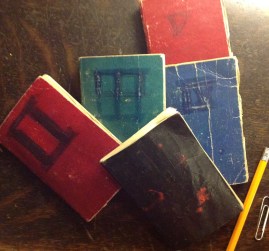
 penny varieties — perhaps at an inflated price from the Kenmore Stamp Company approval service, I decided in my 12-year-old, penny-pinching brain that I would try to save myself the cost of these stamps, which would be duplicates. And so I continued:)
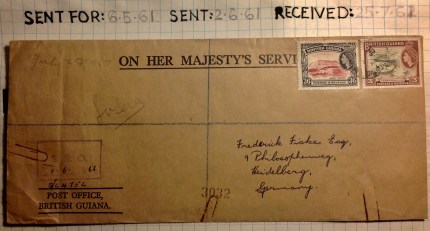
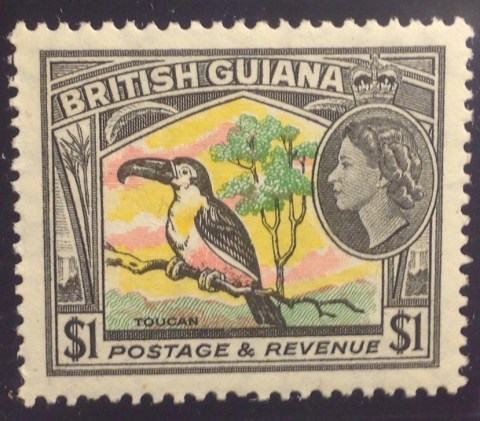
 On April 29, I received a puzzling response from British Guiana, dated April 19. As it happens, I saved the rather undistinguished envelope in my Worldwide Covers album (see right), with the note inside. It was a form letter with some blanks filled in, titled, “British Guiana Postage and Revenue Stamps.” It came from the Chief Accountant at the General Post Office, Georgetown, Demerara State, British Guiana:
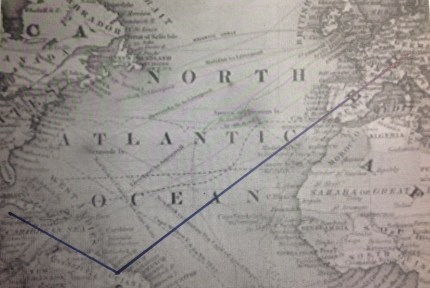 South American colony was a way-station for mail steaming from Europe to the Caribbean colonies. Let’s see what a map of that route would look like …
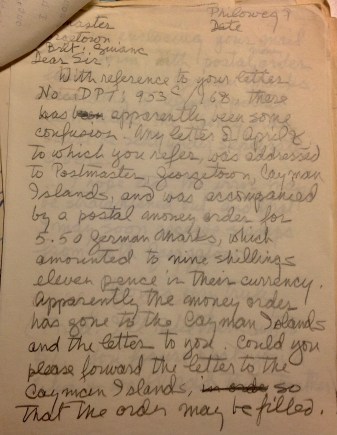 Philoweg 9
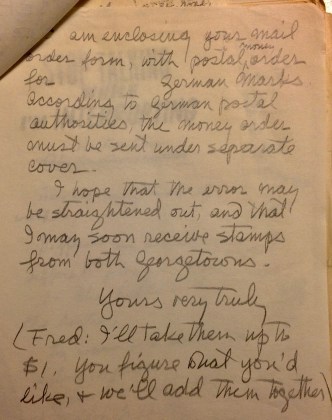 amounted to nine shillings eleven pence in their currency. Apparently the money order has gone to the Cayman Islands and the letter to you. Could you please forward the letter to the Cayman Islands, so that the order may be filled. I am enclosing your mail order form, with postal money order for XXXX German marks. According to German postal authorities, the money order must be sent under separate cover. I hope that the error may be straightened out, and that I may soon receive stamps from both Georgetowns. Yours very truly (Fred: I’ll take them up to $1. You figure what you’d like, and we’ll add them together)
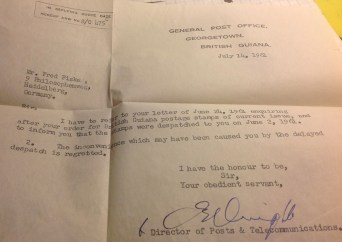 (To) Mr. Fred Fiske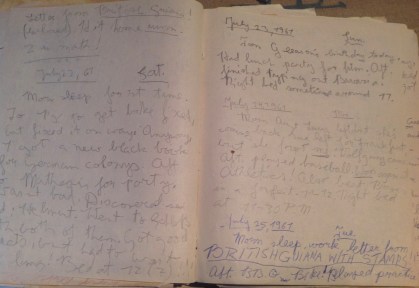
 provisionals. Today only one example survives of the one-cent, printed on dark magenta paper, bearing the colony’s badge of a sailing ship in black ink. When this rarest of stamps changes hands, which is infrequently, it goes for millions.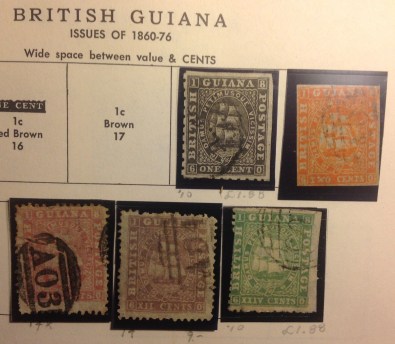
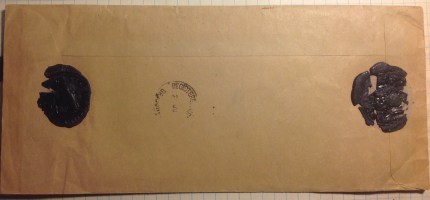
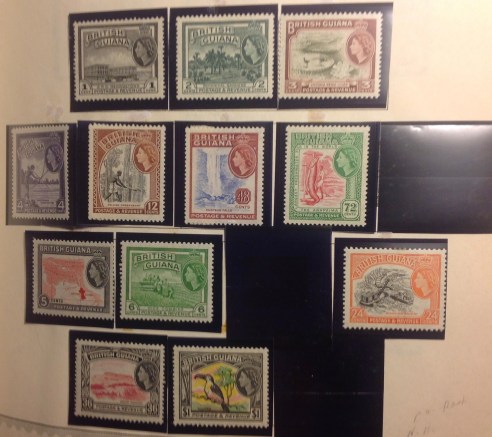
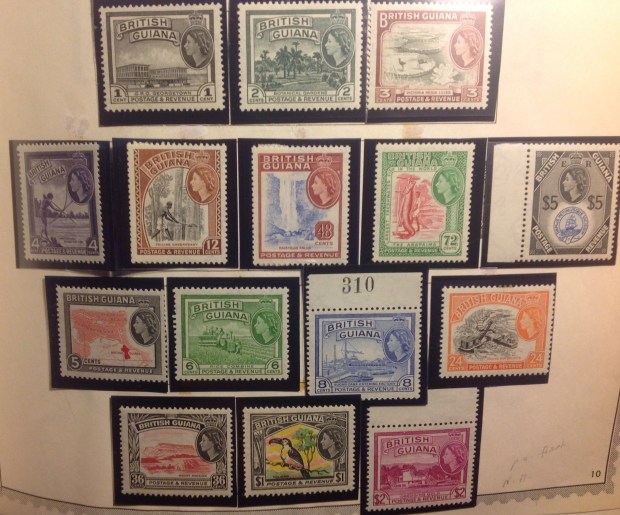
 black wax seals, embossed with a crown and what looks like the letters “STAMP AND PO’S.” The envelope inside contained gorgeous stamps, post-office fresh,
  from one cent all the way to the $5. I gave Pa the complete set and kept the second set to the $1, which was as far as my money went.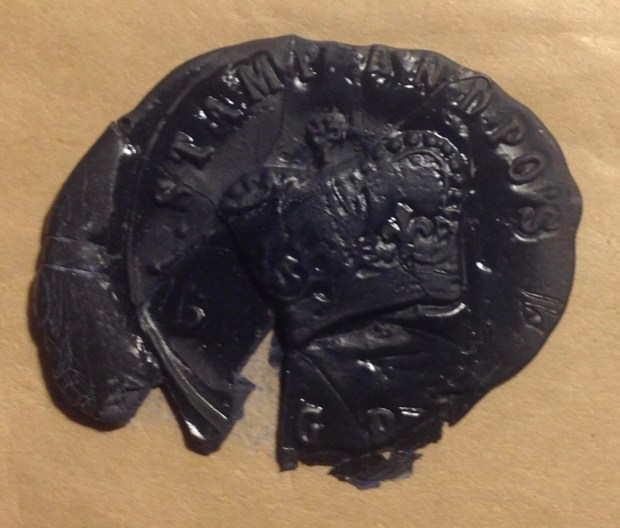

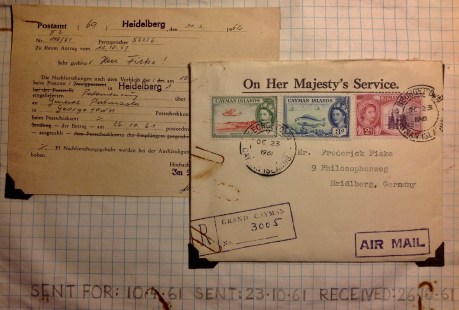 On Oct. 26, a packet arrived from the Cayman Islands. In my Worldwide Covers album I still have the envelope, postmarked Oct. 23. That’s more than six months after I sent that first letter April 10, supposedly steaming toward the Caymans, but ending up instead in … British Guiana.
 My cover album page also preserves a notification card from the Heidelberg post office that might help explain the delay in the Cayman Islands delivery. To be precise, however, I would have to decipher such phrases as “Nachforschungen nach dem Verblieb,” and “Nachforschungendegebuehr wurden by der Aushaendigung diesen Schreibens erhoben.” The gist of it, as far as I can make out, is that the Heidelberg P.O., in response to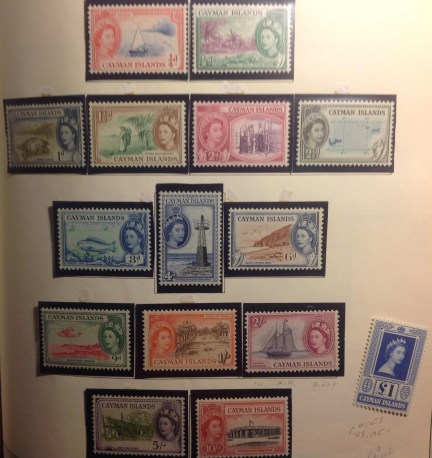
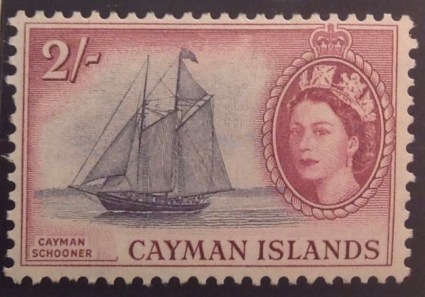 where it arrived after just three days. By the way, the card with the explanation from the Heidelberg P.O. was sent to me March 30, 1962 — more than five months after I got my stamps, and nearly a year since I sent out my first letter on April 10, 1961.
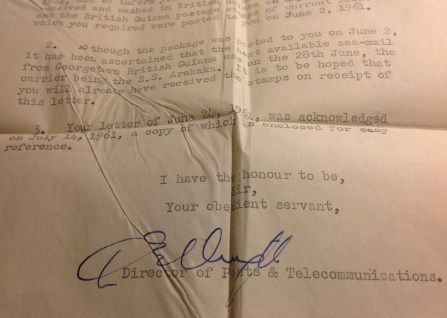
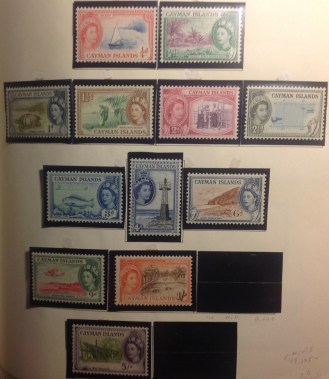
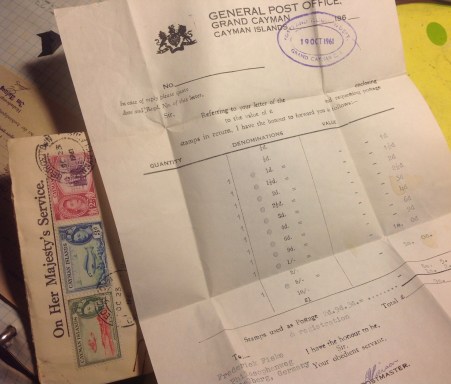 I must add this piquant detail: the itemized list included in the packet (see right) shows that the postmaster (“… your obedient servant, etc.”) had thoughtfully omitted the 1/4d or 1/2d stamps, thus fulfilling my ridiculous request in the original letter of April 8, and saving me three-quarters of a penny for the unnecessary duplicates …
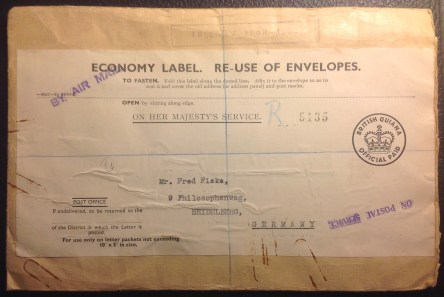 another, thick envelope from British Guiana, also preserved in my Worldwide Covers album (see right). This one arrived April 3, 1962.
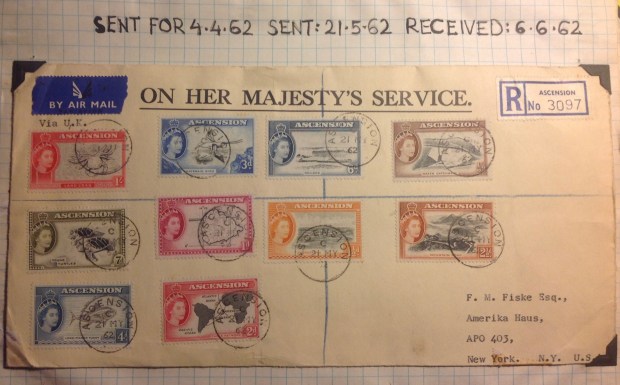
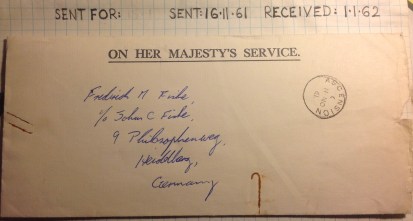 The envelope and letter from Ascension, preserved in my Worldwide Covers album (see right) and dated Dec. 4, 1961, reads: “Dear Sir, Thank you for your letter of the 15th October.
 ** My envelope mailed Jan. 4, 1962 to “Postmisstress (sic), General Post Office, Georgetown, Ascension.” On the back is a circular postmark inscribed, “Jan. 7, 1962 — G.P.O., British Guiana.”
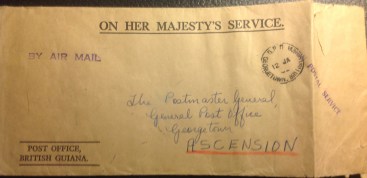 ** An envelope “On Her Majesty’s Service,” inscribed, “Jan. 12, 1962, G.P.O. Georgetown, British Guiana,” addressed to “The Postmaster General, General Post Office, Georgetown, Ascension.” This envelope presumably included the envelope I had intended to send to Georgetown, Ascension, but which ended up in Georgetown, British Guiana — just like my earlier letter to George Town, Cayman Islands. On the back of this second envelope was another circular date stamp, inscribed “22 Ene (Jan.) Aeropostal – Paraguay,” indicating that my letter had been misdelivered once again, this time thousands of miles south of British Guiana — to Paraguay!
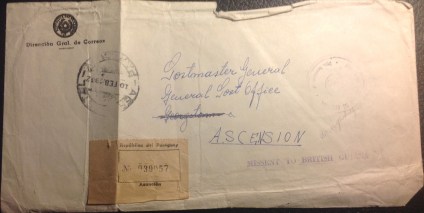 ** The third envelope was a larger size, white and flimsy, certainly large enough to contain both my original letter to Ascension and the follow-up envelope from British Guiana. It carried a circular date stamp, inscribed, “Aeropostal, Paraguay, 10 Feb. 1962.” This envelope, like the second one, was addressed to “Postmaster General, General Post Office, Georgetown, Ascension.” Interestingly, “Georgetown” was crossed out — apparently some official decided there were just too many Georgetowns involved! A registration sticker identified the sender’s location as “Asuncion, Republica del
  Paraguay.” And here comes a real shocker: A rubber stamp in the lower right corner declared: “Missent to British Guiana.” (see enlargement, right; apparently this happened often enough that it warranted a rubber stamp!) Sure enough, on the back of the envelope from Paraguay was another circular date stamp confirming arrival in British Guiana, inscribed, “Registered Airmail, 21 Feb. 1962.”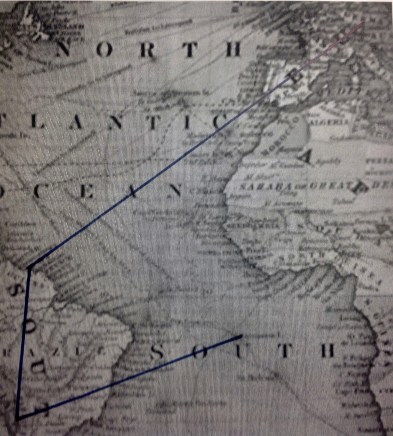



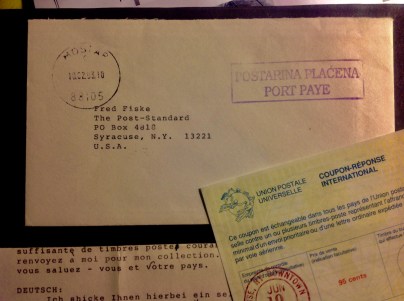 The envelope postmarked “Mostar 10.2.93” arrived in my mailbox, in response to my international postal coupon, without a legal postage stamp, an illegal stamp or even a Cinderella. Instead, it carried an ink stamp that read: “Postarina Placena / Port Paye” — postage paid.
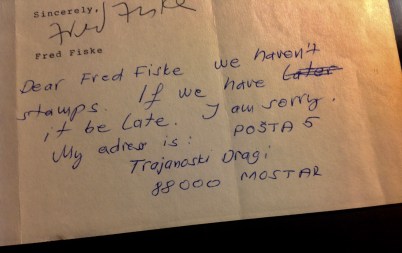 signed “Trajaneski Dragi,” that was as poignant as it was informative. “Dear Fred Fiske,” the note read. “We haven’t eny stamps. If we have it be late. I am sorry.”
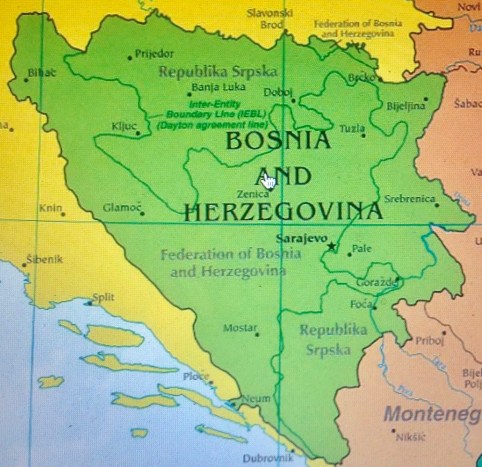 Mostar lies in the southwest of the
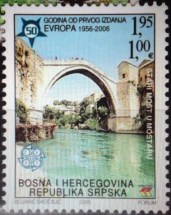
 The Serbian postal authority — or rather, its private contractor — launched a campaign to have its Europa 2017 stamp (right) chosen as the most beautiful in Europe. In 2017, the multi-nation Europa issue settled on a theme of castles that are still standing. In its pitch, the Serb promoters sounded a theme of peaceful coexistence you don’t hear often enough these days. “Once seen as symbols of power, defence, war and supremacy over other kingdoms, it is extremely positive to see these monuments survive the sociological and political evolutions to have a much more peaceful and beautiful connotation at present times.” The uplift continued: “Today these castles are preserved as monuments that do not only teach us about our own past history, but they can also demonstrate how we no longer need fortified walls in Europe, in order to live in safety.” Then came the hook: “Poste Srpske through this topic are proud to present the fortress Kastel, and we urge you to vote for it via an online competition organized by the Post Europ, the association that represents European public postal operators …” (The deadline for votes was Sept. 9; 2017; for the contest results, go to
  In the interests of intra-national good will and fair play, it behooves me to point out that the other two stamp-producing entities in Bosnia-Herzegovina also put out Europa 1017 castle stamps. I don’t know whether they were entered in the contest for Europe’s most-beautiful stamp, but they are pretty nice, don’t you think? Which one of the three do you prefer?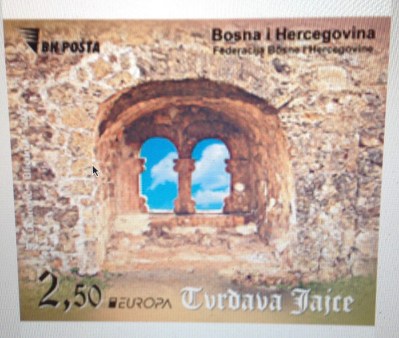
 Because of my
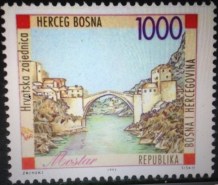
 Also considered spurious is another set (right), which is listed by a dealer as “Bosnia-Herze-govina/Croatian overprints,” and consists of eight stamps from the Yugoslav definitives, this time with “Jugoslavija” blacked out and replaced by the checkerboard Croatian coat-of-arms.
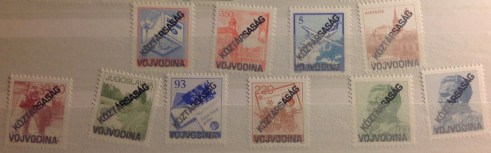 Another set,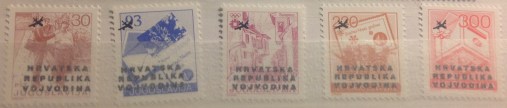
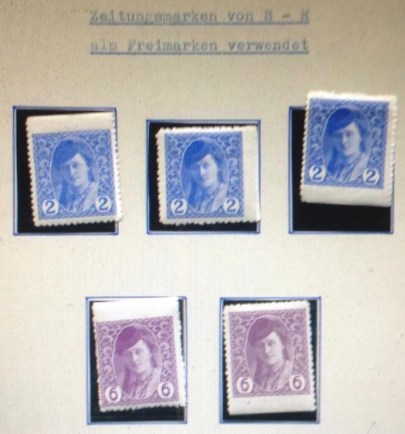 Bosnia-Herzegovina has had stamps since the 1870s, when it was part of Austro-Hungary. These stamps depicting a charming Bosniak girl were issued in 1918, at the very end of the empire. They are not “real” stamps, but rather newspaper revenue labels. You’ll notice there isn’t even a country name on them. After Bosnia-Herzegovina became part of Yugoslavia, the “anonymous” stamps were reissued, also surcharged (example above), and used for postage. Thus we have an example of a Cinderella stamp
  that was repurposed as a legitimate postage stamp.
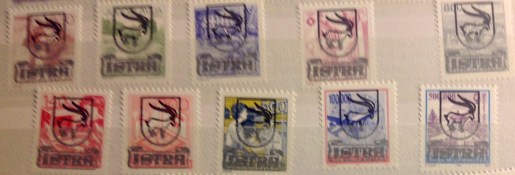 Here are more examples of Yugoslav definitives overprinted for “local” use by the territories of
  Istra (above right), Sandza (right) and Zapadna (below right). I could spend time trying to
  figure out if these are cities, or regions, or states of mind in the Balkan universe — but I won’t. I am intrigued by the longhorn in the Istra coat of arms, the Islamic star and crescent moon for Sandzak, and the fleur de lis and banner for Zapadna — they all suggest multi-ethnic aspirations in contention. I appreciate the struggle, and am glad that everyone seems to have worked things out sufficiently to be living in peace. I like to think of these stamps — all illegal, as far as I know — as emblems of a process that has led to tolerance, coexistence and self-expression.
 The breakaway Balkan province of Kosovo is a whole story of its own, which I won’t try to retell here. Instead, I display two philatelic artifacts from its modern history. The first set, above, is a Cinderella issue representing Kosovo’s national aspirations.
  The stamps at right were issued on behalf of the NATO peacekeeping force that did so much to keep things from going from bad to worse in Kosovo. Emerging from U.N. supervision, Kosovo declared its independence in 2008. Its autonomy remains in dispute — Kosovo is not a member of the U.N. or the Universal Postal Union, so its stamps may or may not be legal …
 Here are early stamps from the Serbian side in Bosnia-Herzigovina. In the top row, the stamps are inscribed “Republica Srpskpa,” which corresponds to the name for territory within national borders, but somehow distinct from the federation itself (see map, above). The lower row of stamps add the word Krajina. This refers to Serbia’s claim to territory extending into Croatia, essentially redefining the borders (krajina means “frontier.”) NIce try, Serbia. Eventually the krajina was reaffirmed as the pre-existing border between Croatia and Bosnia-Herzegovina. The Krajina label was never recognized internationally, so these stamps are illegals, or Cinderellas — though as you see below, there are postally used examples of these stamps on covers.
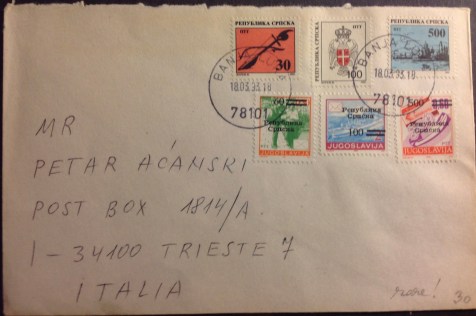 Here are a couple of covers I purchased on eBay for a few bucks each. The one on the left features stamps from Republica Srpska which are supposed to be illegal, but were postally accepted just the same on this letter to Italy. The stamps
  on the the right-hand cover were used internally. As the postmarks indicate, the covers originated in Banja Luka, a city in northern Bosnia-Herzegovina that today lies within the boundaries of the Serbian-claimed territory.
 This oddment at right was listed on eBay as “Travnik probe 1992.” I believe it was issued during the Croat-Muslim conflict around Travnik in the central region of Bosnia-Herzegovina in 1992. (The fleu-de-lis design echoes the Zapadna Cinderellas, above.) The price on eBay is just a few bucks, but I’d pay more than that for an example of this stamp postally used on an envelope.
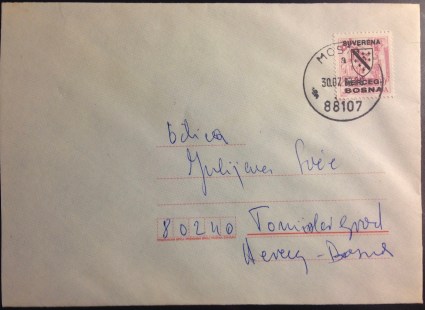 I include these two covers I bought for my collection, both mailed in Mostar, to illustrate how illegal stamps can be used on legitimately posted letters. Both letters were mailed internally — the one below right didn’t even leave Mostar. Something about the postmarks struck me. The envelope above left is dated 30.2.92 — Feb. 30,
  1992. The one below it was postmarked 02.08.92 — Aug. 2, 1992. You may recall that I mailed my international postal coupon to Mostar in June, 1992 — four months after the first cover was postmarked, two months before the second cover was processed. My letter should have arrived in Mostar in plenty of time for a return cover to be embellished with those same stamps, legal or not. OK, I understand postal officials may have been distracted by a few things, including civil war. What may be most surprising is that old Trajaneski Dragi got around to responding to my inquiry at all. By February 1993, it seems there were no more stamps available — legal or illegal. Where did the stamps go? Did they just run out? Were they confiscated by one side or the other?
 Finally, here is an image I captured from the internet. The overprint is intriguing: It sets a date — 11.05.1994 — that’s May 11, 1994, more than a year before the Dayton Accords would end the Balkan conflict. The stamps bear the inscription “BiH Konfederacija” — Confederation of Bosnia- Herzegovina — and alternating cities, Vienna and Geneva. What role did these cities full of diplomats and international civil servants play, along the road to Dayton? And what about that word, confederacija? The Dayton agreement established Bosnia-Herzegovina as a formal “federation,” not a loose “confederation” of sovereign states. Thus, these stamps not only are Cinderellas, but they rapidly were superseded by history.
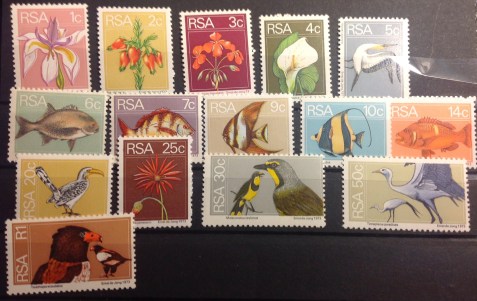 ** A South Africa set from the late apartheid era. It is not very valuable. though it is a very pretty set of birds, plants and fish — a desirable item for topical collectors, I would think. On second thought, though, it poses a challenge to topical cllectors, in that it combines three specialties — birds on stamps, plants on stamps, fish on stamps. Then again, topical collectors may not care about complete sets. I’ll have to find out some day …
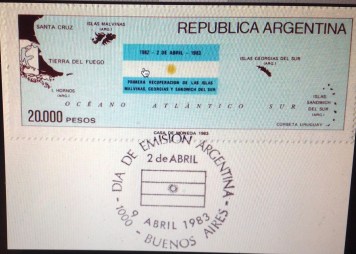
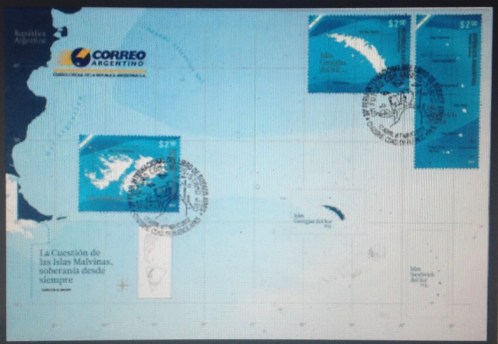
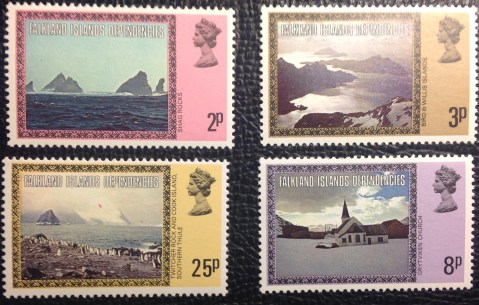 ** A long, incomplete set from the 1980s Falkland Island Dependencies. The stamps were cheap, probably worth little if anything — but oh! What scenes of desolation: “Shag rocks” … “Bird and Willis Islands” … “Twitchern Rock and Cook Island” … These stamps purportedly were printed for use on the forlorn islands of Sandwich and the South Shetlands, closer to Antarctica than the southeast coast of Argentina. Interestingly, it was also in the 1980s that Argentina went to war with Great Britain over these islands, along with the relatively nearby Falkland Islands. The British prevailed, and in this set reaffirm their claim to the Falkland Island Dependencies. Argentina, the loser, has never given up its claims. (For more about this, see my post on Stamp Wars, October 2017.)
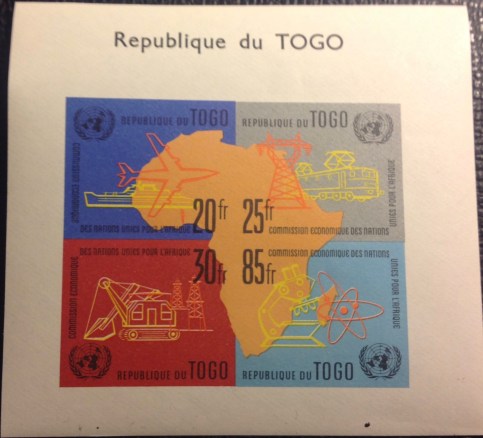 ** A souvenir sheet from Togo, 1961, This fills a large space on a page of my Togo collection, which is far from complete. Indeed, I have no great ambitions for my Togo collection. Still, Togo’s role in colonial and post-colonial Africa grabs my interest. The slogan on this set of stamps — Commission Economiques des Nations Unies Pour L’Afrique (Economic Commission of Nations United for Africa) — sounds poignantly hopeful and naive, even deluded, given what has happened in Togo and west Africa, and Africa generally, over the last 50 years.
 ** The 250 franc from Upper Volta (1968) cost a couple of bucks. In a beautifully engraved, multi-color cameo, it depicts a satellite in space, over the West African capital city’s relay station. The inscription reads, “Ouagadougou — Station Spatiale.” There is a spot in my Africa albums for this stamp, though I harbor no ambitions ever to assemble a valuable collection from Upper Vola (now Burkina Faso) or most other countries. What draws me is the history of post-colonial Africa. I cling to the fond hopes portrayed in these stamps of international cooperation, progress, peace and human development. What breaks my heart is that these hopes soared more than 50 years ago, then came crashing down in the ensuing decades.

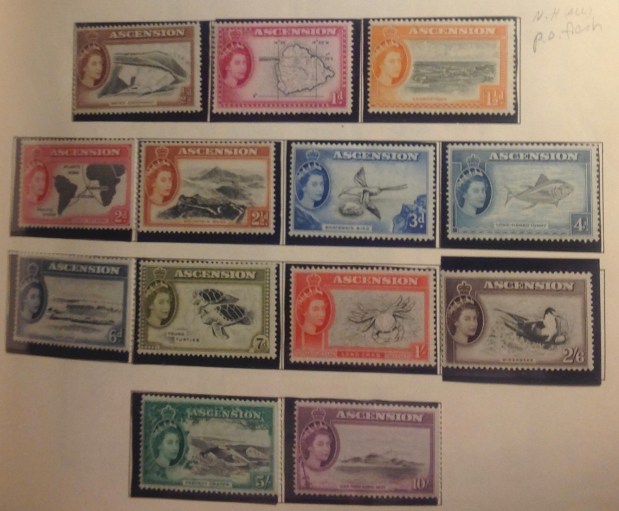
 ** The Guernsey set (1-7) may look pretty dull, but I was attracted by the color varieties and the sense of completeness about this historic set; or rather two sets, one with watermarks, one without. Notice that these sets, like GB stamps, do not carry the name of a country. In a way that seems somehow ineffably English, it seems Great Britain, having invented stamps, never had to stoop so low as to flaunt its name on its postage labels — or those of its channel islands (though Guerney, Jersey and the Isle of Man soon did put their names on their stamps.) Indeed, the islands in the English Channel developed philatelic cottage industries, with colorful and
  collectible stamps down through the years. Guernsey’s first philatelic presence came during World War II, when the Nazis occupied the island, along with neighboring Jersey — so close, yet so far from Winston Churchill’s citadel. These newer stamps, from the 1950s, featured the pretty young Queen Elizabeth II. They only cost a couple of bucks, yet they seem to herald the modern, post-war era.
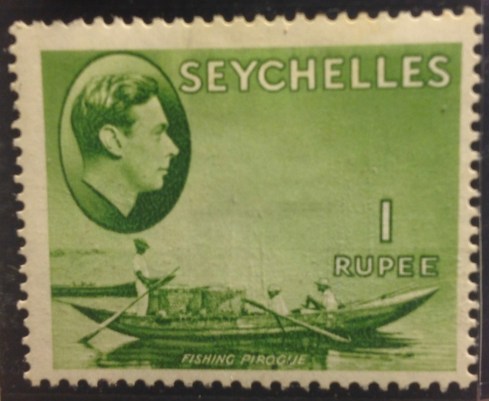 What a dull-looking stamp!
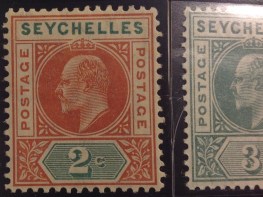


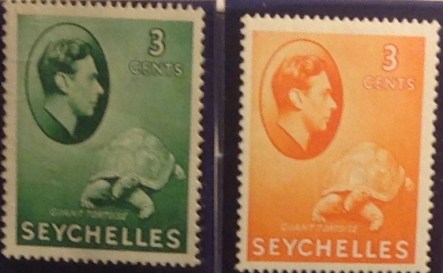 so many years of the same design, now there was something new! One wonders: If the purpose of maintaining the design was in part to convey a sense of the British empire’s soliditiy, continuity, normalcy and orderliness, then what did the radical departure into gaudy labels in 1938 signify?
  This shift in the philatelic paradigm surely was a signal — unconscious, perhaps — that the colonial era was no longer going to be quite so predictable …
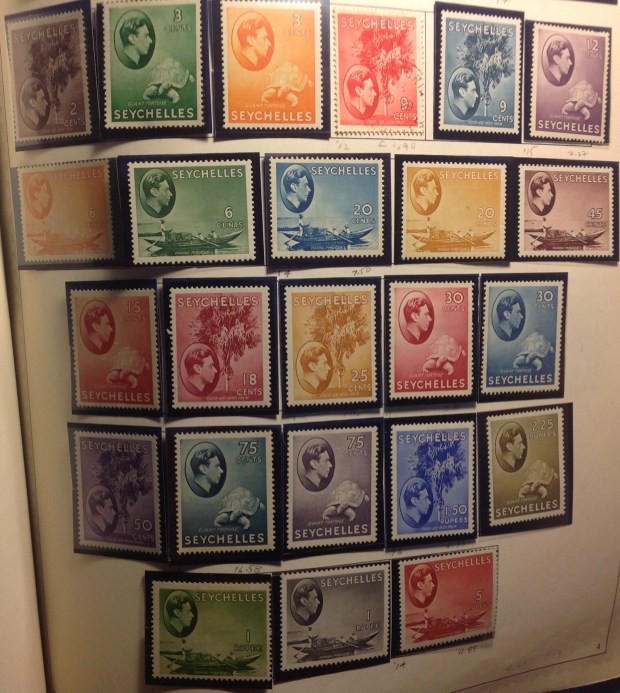
 III. What a lot of stamps there are in this set! Between the 2-cent stamp and the 5-rupee value I count 24 varieties — considerably more than the average for the first George VI set in other colonies. (Though I must add that right from the beginning, Seychelles did issue more long sets with color varieties
  than most colonies; please don’t ask me why. Mauritius, an island colony a mere 1,000+ miles away in the Indian Ocean, also seemed to issue long sets — 20 stamps or more,
 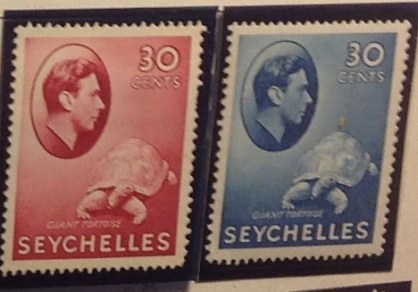 with different colors. Go figure.) Over the past 18 years I managed to accumulate a nearly complete Seychelles 1938 George VI set, which is tantalizing for a diehard collector/investor like me. But an affordable 1 rupee yellow-green eluded me — until now. Believe it or not, 37.99 euros is actually a great price for a decent copy of the stamp —
  even a hinged one, like this. Other prices online ranged up past $50, much higher for a never-hinged example. To have the set complete is a special pleasure of stamp-collecting — particularly if it results from a process of patient accumulation over time.
 V. The 1 rupee yellow-green could be considered the key value of the set. It is about 100 times more valuable than the 1 rupee gray that took its place in 1941. At least, I figure that’s what happened — all these earlier values were withdrawn, or at least no longer produced, after just three years. The relatively short circulation lifespan of those earlier stamps no doubt helped to account for their subsequent rarity and inflated value.
 The remaining set stayed in circulation from 1941 on, until a new set appeared in March 1952, featuring a portrait of a shockingly aged George VI. (Unfortunately, the king had died a month
  earlier; the resourceful stamp makers simply replaced the portrait of George VI with a cameo of the young Queen Elizabeth II and issued that set in 1954; notice how the stamp-makers kept the same gray-and-white coloring for the 1-rupee stamp right on through. More sets followed; the Seychelles gained independence in 1976.)


 while he soared into the imaginative realms of his magnificent stamp collection, once said, “I owe my life to my hobbies — especially stamp collecting.”
 1. When this Bolivian postage stamp map (right) was first issued, in 1928, it caused an uproar in neighboring Paraguay. The two nations had been having a long dispute over the semi-arid, sparsely populated Chaco region. Paraguay and Bolivia, both land-locked, were among the poorest nations in South America. This postage stamp for the first time boldly named the territory that would extend Bolivia’s southeast border, “Chaco Boliviano.”
 A year earlier, Paraguay had established its philatelic claim to the Chaco, a region that constituted about 40 percent of its northern land mass. A Paraguayan stamp in 1927 (right) displayed a corresponding map with the label Chaco Paraguayo (you can just make it out underneath the “Paraguay” banner.) The very next year, Bolivia would “occupy” the Chaco, philatelically speaking. The battle was on! Bolivia kept laying it on, reissuing its design in 1931, the year before the fighting began. Its last map stamp with the Chaco Boliviano inscription was issued in 1935, the year the two sides agreed to a cease fire.
 Postal officials in Paraguay countered the Bolivian affront with more stamps, this one at right a bit larger than the offending ones, with a map that clearly labeled the disputed territory as Chaco Paraguayo. To drive home the point, the stamp carried a legend at the bottom: Ha sido, es y sera (“Has been, is and will be”). As if that weren’t clear enough, the message continued on a pair of shields: El Chaco Boreal / Del Paraguay. (boreal means “northern”)
 In the bitter fighting, Paraguay eventually took control of much of the territory, and a ceasefire was reached in 1935. But it was not until 1938 that a truce was negotiated and signed. The agreement awarded Paraguay about two-thirds of the Chaco. That nation followed up with a series of self-congratulatory stamps celebrating the accord. One stamp (see right) really rubbed it in: A map pointedly emphasized Paraguay’s territorial dominance, and was accompanied by a suitably smarmy quotation, “Una paz honoroso vale mas que todos los triunfos militaries” (“An honorable peace is worth more than all the military triumphs”).
 lower stamp depicts a dreaded U-Boat slicing its way through the sea under a corona of sunbeams, while a ship burns in the background — presumably its enemy prey. British? American?
 helicopter clearly labeled, “U.S. Army.” In the stamp below it, a U.S. B-52 explodes, hit by ship-to-air artillery, while another flaming jet in the background plummets to the Earth.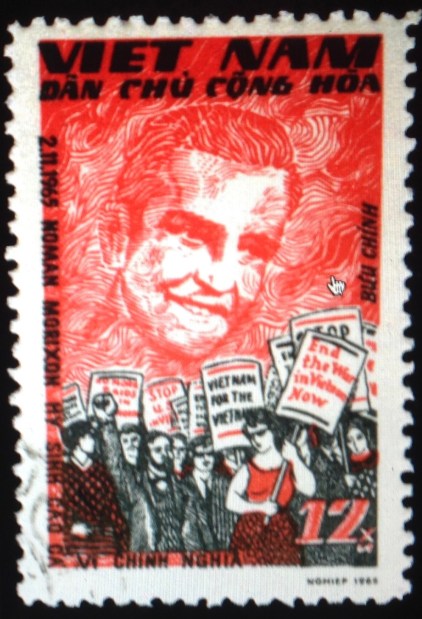

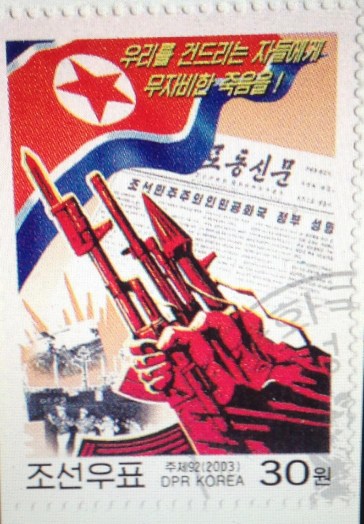


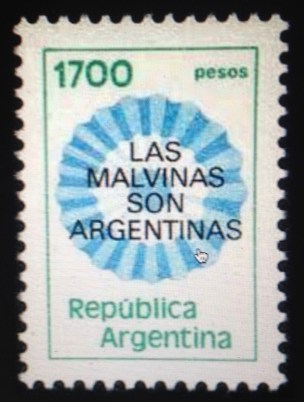
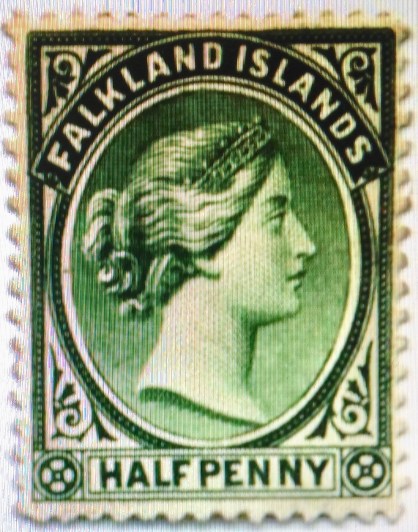
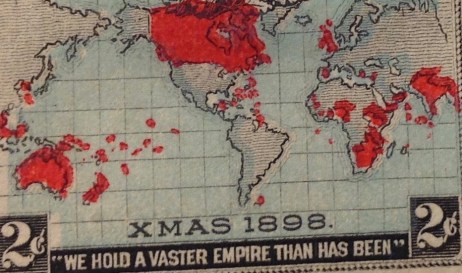
 its place in the imperial constellation.






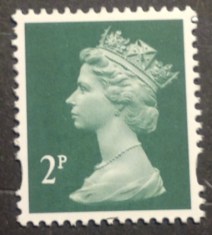
 Eisenhower.
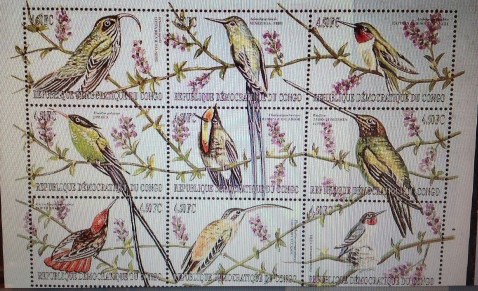
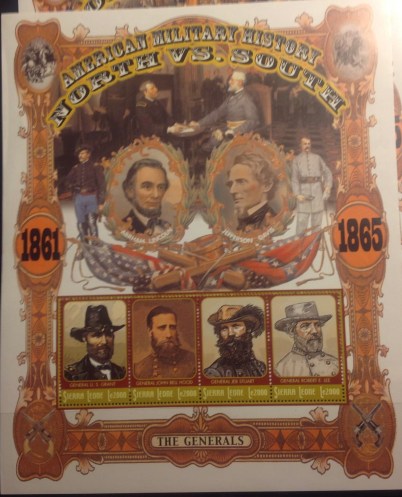
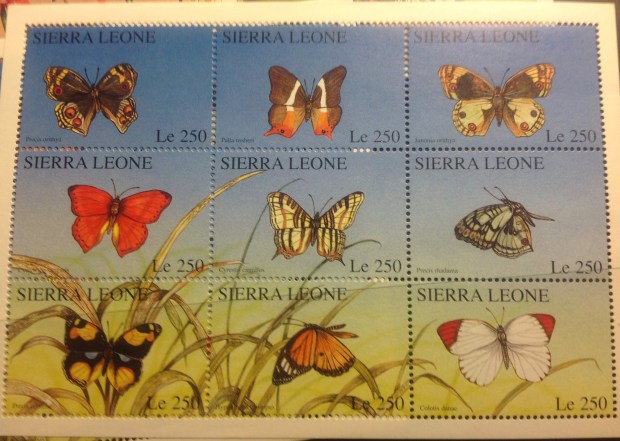
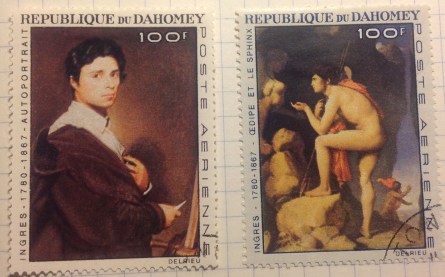 These stamps have nothing to do with Fujeira or Sierra Leone, any more than the sets of French classical painting on stamps from the Arab world or Central Africa. Is that a philatelic crime? At least a shade unethical?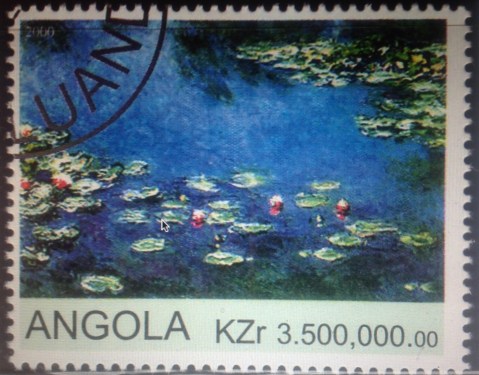




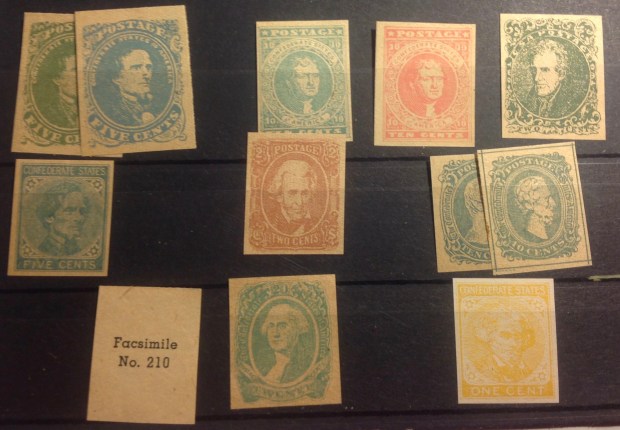
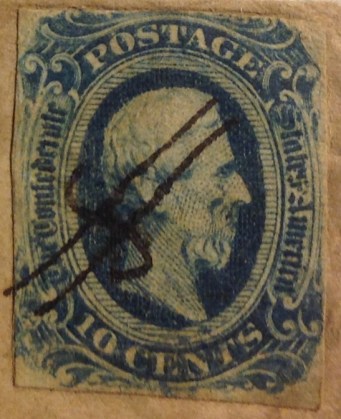 MacIntosh agreed to label the stamps “Facsimile” and number his fakes. At right, for comparison purposes, I offer an example of the actual 10-cent Jefferson Davis profile stamp of 1863. I know it’s genuine because it was used on a cover, and passed down to me in my collection. Am I really sure? Well, look closely: the engraving itself is distinctive (the cheap imitation of the 10-cent stamp above, which is in the second row, far right, is lithographed, if I’m not mistaken.)


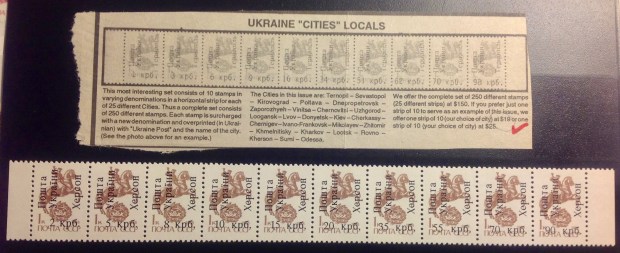
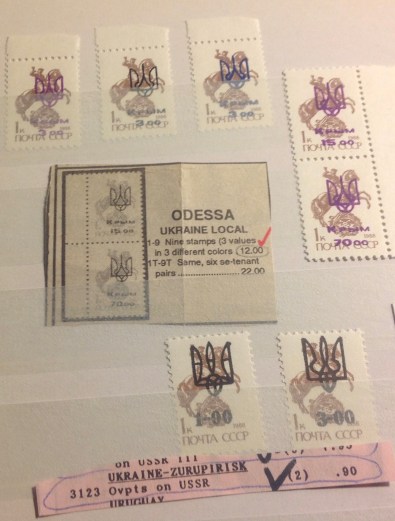
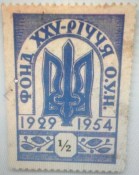

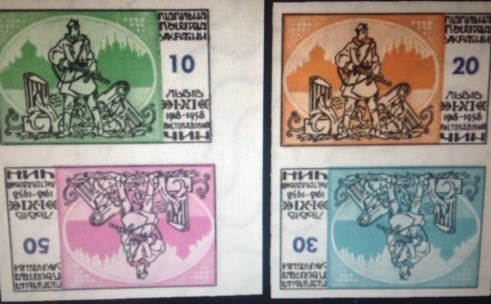 This illegal Cinderella series from 1958, which marks the 40th anniversary of the founding of the Ukraine National Republic, makes its propaganda point pretty clearly: Rise up, Ukrainians!
 Here are some creepy covers. I don’t suppose you would list as Cinderellas these stamps from Nazi-occupied Ukraine in World War II. The stamps were “legal” in their creepy way. The top example is a philatelic cover created in 1942, during the brief Nazi expansionist era. (Notice how the efficient Nazis already had their own cancellation for Ukraine.) By March of 1943, when the cover at right was mailed, the wheels were coming off the Nazi juggernaut. I like to think this envelope shows evidence of desperate times — the haphazard address and placement of stamps, the general wear and tear, one stamp with a corner missing …
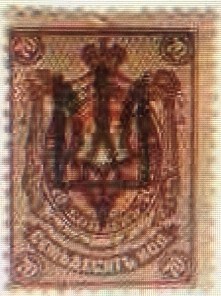
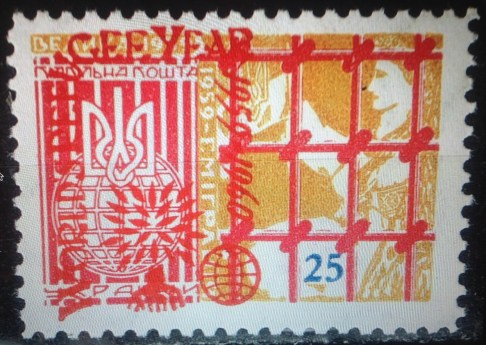 Here is another illegal Cinderella from Ukraine that I include because it features the familiar trident — and also because of the crude art work, overprint and around-the-edge lettering, “world refugee year, 1959-60.” It would rank as one of the worst stamps ever designed, were it not for the fact that it’s not really a stamp to begin with.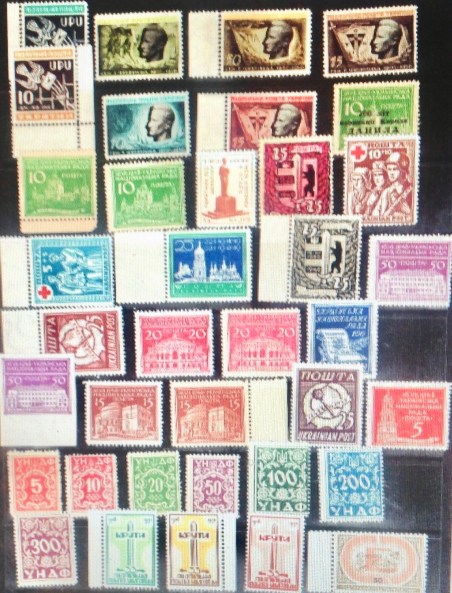


 “unlisted,” which raises my suspicions. Nevertheless, Yours Truly shelled out $13.75 for this “error.” What’s an illegal error worth?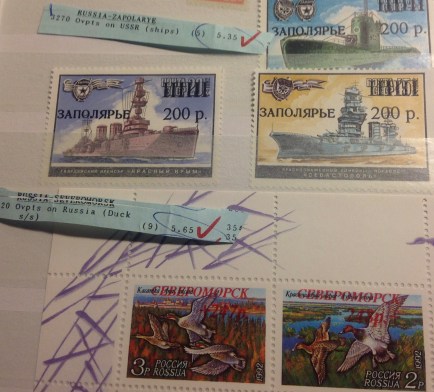








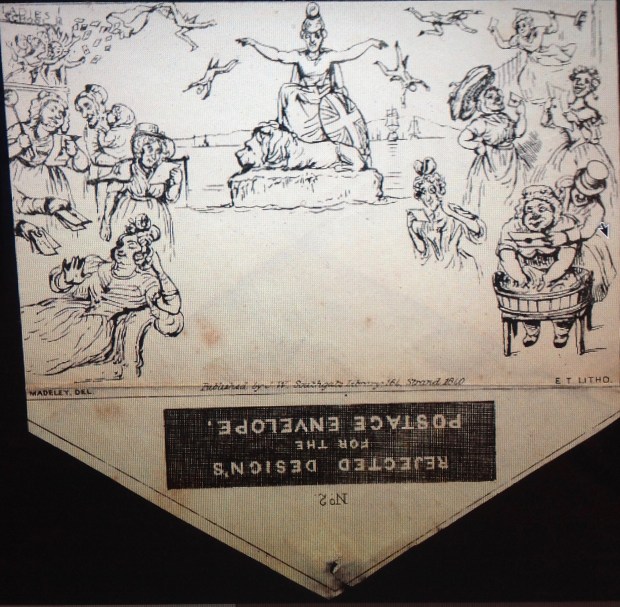
 The question is asked: What was the first Cinderella? That is, what is the first artistic imitation of a postage stamp or “Artistamp,” not sanctioned by an official postal service?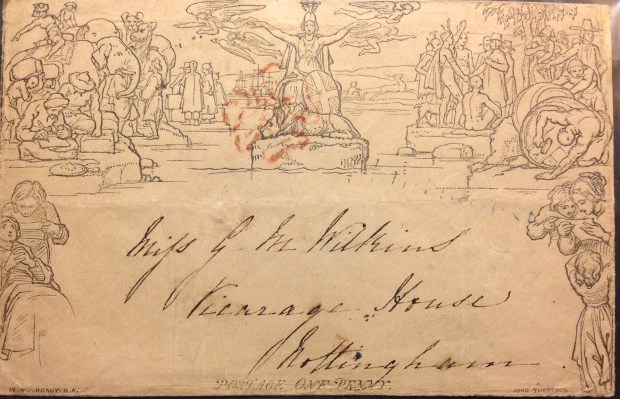
 This first caricature is noteworthy not just because of the pipe-smoking figure of Britannia, but because it comes with a detailed description in a contemporaneous gazette. I will quote from the commentary at some length, because it goes directly to the point that the Mulready Cover is so elaborate, obscure, even ribald, that any point is lost and the hapless viewer must make up his or her own story. Herewith the 1840 text, to accompany blow-up images of the section being satirized:
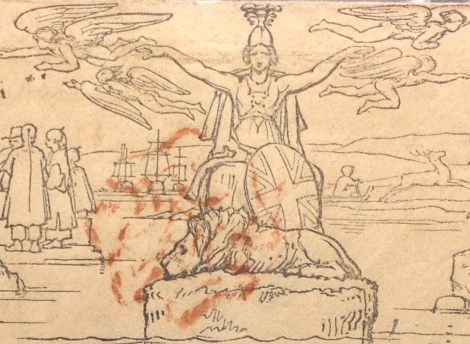 British lion, looking as mild as if suckled upon ass’s milk, and having not so much as a growl inside of him. With spectacles on nose, and his nob covered with a Palmerston cap, he is leisurely reading the latest foreign intelligence. This once vigorous animal appears to be in his dotage, and his tail hangs as limp as a thread-paper! …”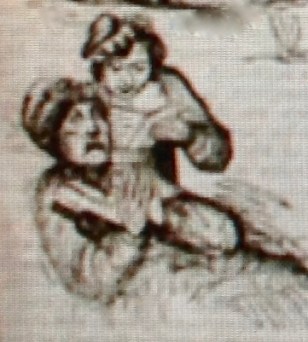
 I’m not done yet. Here is the satirist’s impression of the domestic scene in the lower left corner (see enlargements): “… There is the portrait of a venerable old lady of the name of Smith. She is bed-ridden, ladies and gentlemen, and is listening to a letter read by her niece. Mark the figure of Mrs. Smith. She is looking all sorts of gratitude, and her two hands is clasped. The letter is from her grandson, John Smith, reported to have been hanged for burglary and murder; whereas that letter, just received by the penny post, assures the delighted parent that her grandchild is transported for life, for robbing on the highway, with the minor offense of slitting an attorney’s nose. …”



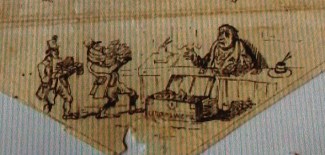 made out of Mulready Covers. Kinda creepy!


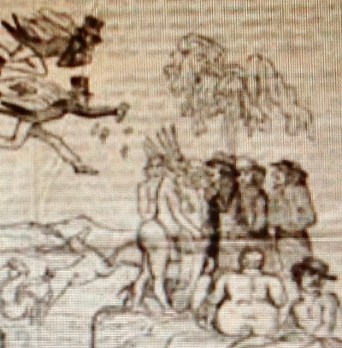
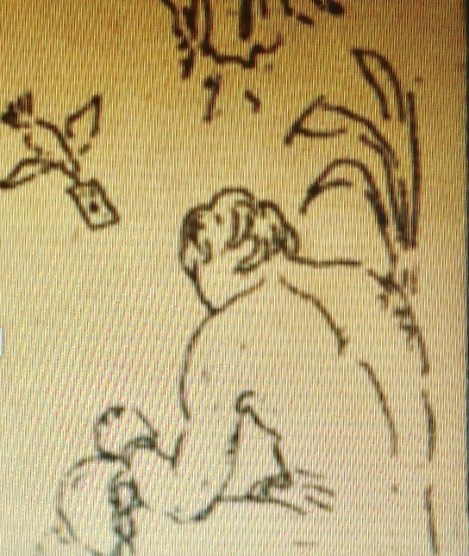
 I include a blowup of the same corner of the authentic Mulready Cover. In the dignified scene, one (naked) Indian shakes hands with a (fuilly-clothed) Pilgrim, while others stand back. In the foreground, another (naked) Indian sits on a mat, facing away from the viewer. Never mind the (naked) winged messenger in the background, or the (naked) Laplander driving his reindeer sled. Focus on the buttocks! They surely grabbed the attention of the British public, even as they found their way into the caricatures. Were Victorian sensibilities titillated by this expose of supple young butt cheeks? Was there outrage? Gossip? Protest? (Gee, someone should do a paper on this …)