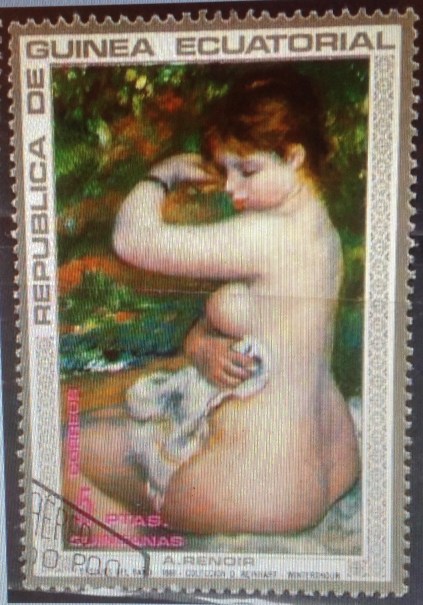
 Contemplate, dear reader, this image of a (cancelled-to-order) stamp, nominally from Equatorial Guinea, a tiny sovereign state on the west coast of Africa that has been grievously plundered and misruled by its leaders, both under Portuguese dominion and in the half-century since independence. The stamp is pretty enough — though the full-color reproduction of an Auguste Renoir painting of a very naked, very pink, big-bosomed young woman seems a bit, well, over the top. Can you seriously imagine a beleaguered citizen of this outlaw African state finding one of these in her or his local post office, for use on outgoing mail? Not likely. Remember all those rules set by the Universal Postal Union about what constitutes a legitimate stamp? (See blog post, September 2017.) Well, this stamp breaks most of those rules. It certainly has nothing to do with Equatorial Guinea. It’s doubtful it ever went on sale in the country, or if so was widely available for purchase. It is by no possible rhetorical stretch an emblem of Equatorial Guinean culture or sovereignty.
 Ditto with the second stamp portrayed here — an image of Jiminy Cricket, the animated character from the Disney film “Pinocchio,” painting an Easter egg. Huh? Tell me why this is anything but a crass effort on the part of “Grenada Grenadines” (or better put, the philatelic agents) to cash in on the market for topical stamps. I wonder if there is an envelope bearing this stamp that actually went through the mail …
There was a time, dear readers, when most stamps were legal. Sure, there were plenty of Cinderella fantasy stamps out there, indeed since the very beginning of stamps. (Read about the satirical “Mulready” covers of 1841, in the blog post of August 2017, “The First Cinderellas.”) But these only masqueraded as postage stamps. Propaganda labels in wartime were something else, as were forgeries. For the most part, stamps were produced under government supervision, readily available at post offices for citizens to buy and use to send mail. The world of extra-legal Cinderellas was pretty tame and innocent — at least until the 1960s.
As late as 1969, my copy of the Scott standard stamp catalogue listed no “illegals” or “undocumented” or “non-standard” items. Neither did my 1971 catalogue. But by 1977 there was a short section, “For the Record,” which listed “items” that “appeared on the market in the 1960s and 1970s, and have not been listed in the Scott Standard Catalogue.”
There followed 14 pages of fine print listing hundreds of stamps put out under the names of real countries, or at least real territories, as follows:
Aden (three states), Ajman (Manama), Anguilla, Bangladesh, Barbuda, Biafra, Cyprus (Turkish mail), Dubai, Fujeira, Grenada (Grenadines), Jordan, Qatar, Ras al Khaima, St.Vincent (Grenadines), Sharjah (Khor Fakkan), and Umm al Qiwain.
A few comments on this list:
 ** The spurious issue from Bangladesh listed in the catalogue came from 1974. It was a suspiciously anodyne souvenir sheet and set of four stamps honoring the Universal
Postal Union. At right is an example from the set, depicting what appears to be a postal runner from Bangladesh. The scene would argue in favor of this being a legitimate stamp promoting local folkways and sovereignty. Apparently not.
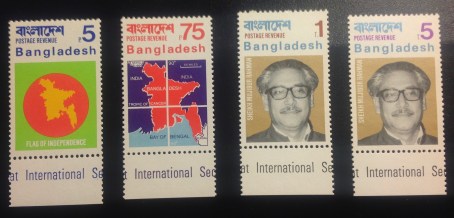 Also interesting is one of the first sets issued after East Pakistan broke away from West Pakistan in 1971 and became Bangladesh. The set of 15 variously depicts a flag, a map and a portrait of Bangladesh’s first president, Sheikh Mujibur Rahman. The catalogue bluntly notes that the set “was rejected by Bangladesh officials and not issued. Bangladesh representatives in England released these stamps, which were not valid, on
  Feb. 1, 1972.” The same designs appear in the first official set from Bangladesh (examples at right) — though the nation’s name is spelled in two words — Bangla and Desh. I have not learned why the other set was rejected, and illegal. I admit I have it in my collection, though. I bought it for a couple of bucks at a stamp show. I wonder if the violent and bloody birth pangs of Bangladesh had something to do with this mixup. Peace had barely been restored and the Sheikh was released from solitary confinement only in January, a month before the spurious stamps were issued. Things never really settled down under Sheikh Mujib — earnest, bespectacled, charismatic and a dogmatic socialist. In 1975, he and members of his family were gunned down by army officers during a coup that returned the region to benighted martial law and years of unrest.
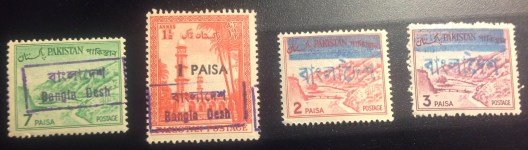 While we’re on the subject of Bangladesh, how about these provisional overprints of Pakistani

- Here is a little bonus, above: This is actually Scott No. 1 from Bangladesh, a stamp I just found on the Internet. It appears to be genuine, if crude — consider, for example the cancellation, which looks authentic, not cancelled-to-order. It is offered online for $5 — a considerable sum for such a stamp these days
stamps? The examples illustrated here are from my collection. How could I resist spending a few bucks to acquire evidence of the first philatelic yowls from a new-born nation? The impression is that these stamps were overprinted — crudely, often by hand stamp — for use during the chaotic time between East Pakistan’s demise and the formal issuing of Bangladesh postage stamps. But if so, where are the envelopes displaying cancelled copies of these overprints? Until I find such evidence, I am inclined to dismiss or at least quarantine these examples as illegals, Cinderellas, or both.

Here is a stamp from Biafra’s first definitive set, which of course is simply a Nigerian stamp with the name crossed out, overprinted “Sovereign Biafra” with the Biafran coat of arms — a peculiarly British holdover custom and barely visible in this crude production.
** Stamps from Biafra, the self-declared republic (1968-71) carved out of the Igbo region of southeastern Nigeria, are in a special category — with ephemeral philatelic companions such as Katanga, South Kasai and other states whose claims to sovereignty never quite made it past global review — but who still managed to produce stamps. (For more on Katanga and other breakaways in the Congo, see the blog post “10 Interesting Anecdotes about the Congo,” March 2017.)
I don’t believe the UPU recognized Biafra’s stamps. If you find a cover with cancelled Biafra stamps, save it!

Such was the chaos in Biafra that philatelic errors quickly appeared — like this example from the definitive series where the printers neglected to cross out “Nigeria.” Errors like this still are likely to command double-digit prices — this image is from the Internet, not my collection.

Eventually, Biafra got around to printing its own stamps — probably in England, Germany or somewhere else. Included in these spurious issues was the obligatory butterfly set — a topical issue which seems to raise a red flag for potential illegality, for some reason. Not that Biafra wasn’t still a nation struggling to make its way; I’m just saying that the Universal Postal Union never officially recognized stamps from Biafra. There are some suspicious signs about this set. First off, how many Biafran letter-writers need a 5 shilling stamp, or even a 2/6 stamp? Alternately, if the currency was unrealistically inflated, what good is a 4 pence stamp? Having never seen these or other Biafran stamps offered as cancelled copies from envelopes that went through the mail, I am inclined to side with the UPU and declare these stamps illegal. Sorry, Biafra. (I also confess I have a nearly complete Biafra collection, which may be worth a couple hundred dollars — purely a philatelic collecting oddity, but there you have it.)

These may be the rarest stamps from Biafra, if anyone cares. Someone must, because they are offered online at up to $20 or more for the pair. The stamps honor “Biafra – France Friendship.” They are overprints on the original overprints of Nigerian stamps. One seller describes “the scarce and rarely seen 2-value set overprinted ‘Biafra-France Friendship’ and surcharged 5 shillings and 1 pound respectively.” The seller adds: “Scott does not list this as a regular postal issue but does mention it and places a value of $27.50. … Very difficult to find, and I suspect considerably undervalued.” The seller offered it for $22.95. I still haven’t summoned the reckless abandon to throw $20-plus out there and catch these stamps, reel them in to make by Biafra collection complete. But writing that last sentence strengthens my resolve.…
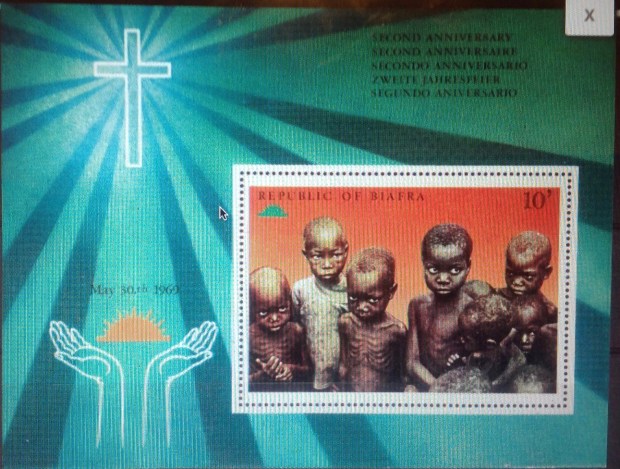
Biafra issued this startling souvenir sheet to mark its second anniversary of independence. Some anniversary. One could question the use of somber, malnourished, even starving children to celebrate sovereignty, or celebrate anything but the regime’s failure to prevent the misery and death of its people. Maybe the goal was to garner international sympathy (and money). This stamp, and a subsequent re-issue of the sheet overprinted, “Save Biafra!” bear mute witness to tragedy, not freedom.

I don’t mean to put The Palestinian Authority in the same basket as Biafra and other failed states. But it somehow fits at this point in the narrative of illegal stamps, because The Palestinian National Authority (PA? TPA? PNA? TPNA?) is still a work-in-progress. Consider for example: The above stamps were issued in 1994, after the historic Oslo Accords. The agreement established the PA as a governing entity, though of a “state” that barely existed — and exists today, some would argue, more in wishes and dreams than in reality. Consider, next, the issue below:

This souvenir sheet, released 18 years after those first stamps above, announces “A State is Born” — the state of Palestine. It depicts PA President Mahmoud Abbas brandishing a document — presumably the UN’s recognition of the PA as a non-member observer state. Before, I guess the PA wasn’t a state, just an “authority.” After 2012 it’s been a full-fledged … er … about that “two-state solution” — I thought that was still being negotiated, if not all but abandoned by both Israel and the PA. How could there be a Palestinian state already? If so, can we celebrate the end of this long, wearying stand-off?

Above is No. 1 from Fujeira. It looks like a legitimate enough stamp, featuring the ruler and a native fowl. But then look at No. 1 from Umm al Quiwain, below. If these are two different states, why do the stamps look like they are from the same set? Are they legal? I ask you …
** Notice that some of the philatelic phelons putting out illegal stamps have issued legal stamps right along — like Qatar and Jordan. And what about those seven Arab Trucial states that combined into United Arab Emirates in 1972? (Want a list? They are Fujeira, Ras al Khaima, Umm al Quiwain, Abu Dhabi, Dubai, Sharjah and Ajman.) The UAE began issuing legal postage stamps, though entrepreneurial printers had been churning out philately for years for Fujeira, Ras al Khaima, Umm al Quiwain and others. Spurious and illegal! warns Scott. Beware of all 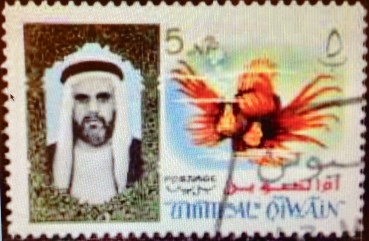 those sets honoring Winston Churchill and JFK, the Olympics, famous artists, butterflies and the rest. My Scott catalogue wouldn’t even show pictures of these “non-standard” non-stamps.

Above is part of a set from Fujeira honoring John F. Kennedy. Below are stamps from a JFK memorial set from Umm al Quiwain. Two sets, two postal authorities. Two countries? Who’s kidding whom?

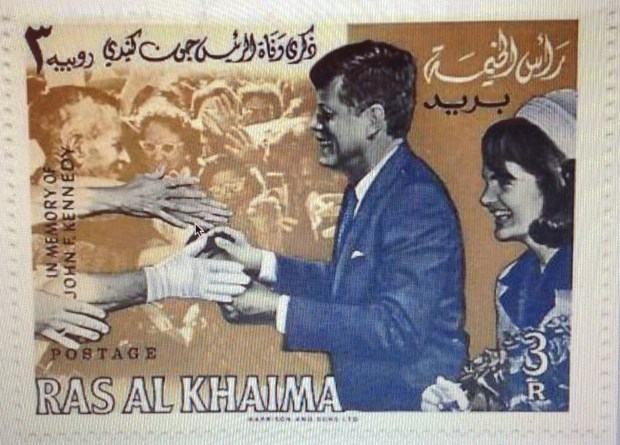
Oh yes, here’s another JFK memorial stamp, this one from Ras al Khaima. Everyone got in on the JFK memorial act, it seems. According to the UPU and Scott, all these stamps are non-standard, spurious, illegal. Get the picture?
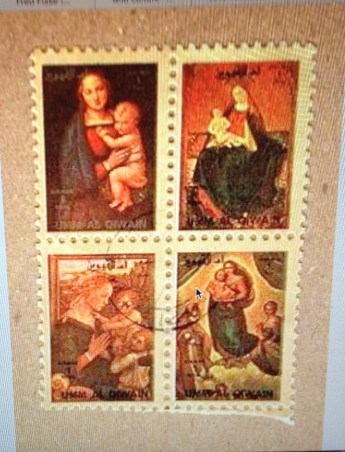
 No need to play this up, but is that really a succession of Catholic-approved Pietas in these art stamps from Umm al Quiwain (below) ? It’s downright ecumenical of this Muslim sheikdom to honor Christian icons on its stamps. What next — a celebration of Jewish holidays? At right is the obligatory butterfly stamp, this one from Ras al Khaima, more or less announcing that this stamp, like the others, is pretty much illegal.

No. 1 from Grenadines of St. Vincent, above, features a stamp from St. Vincent, cleverly overprinted above the name with the words “Grenadines of” (though it does deface the image of the heron). Soon enough, this self-declared stamp issuing entity would come out with its own definitives (see example below) — which doesn’t make them any less illegal …
** I have to add at this point: The stamps combining “Grenada” and “St. Vincent” and “Grenadines” inject fresh Caribbean zest into the fusty realm of Cinderellas, don’t you think? Care for a grenadine? Don’t mind if I do! But a stamp from Union Island, Bequia or Mustique? I’ll pass …
Grenada and St. Vincent are surrounded by a chain of islands known as the Grenadines. St. Vincent claims the Grenadines in its neighborhood — Bequia, Union Island and Mustique, all stamp-issuing entities. The islands in Grenada’s orbit include Carriacou, Petite Martinique, Ronde Island, Caille  Island, Diamond Island, Large Island,
Saline Island and Frigate Island. Thus far, there is just one overall stamp-issuing authority for “Grenada Grenadines.” While some of these islands are unpopulated, how long before they, too, become stamp-issuing entities? I shudder to think …

Here is No. 1 from Grenada Grenadines — honoring the 1973 nuptials of Britain’s Princess Anne and Capt. Mark Phillips. Their marriage lasted not quite 20 years, but the stamp — emblazoned with the crown of Elizabeth II, but still apparently illegal — will endure …

Now we come to Bequia, a charming island in the Grenadines of St. Vincent chain. Along with Mustique and Union Island, Bequia began issuing stamps years ago — none of them UPU-approved. And just look at the themes — a U.S. 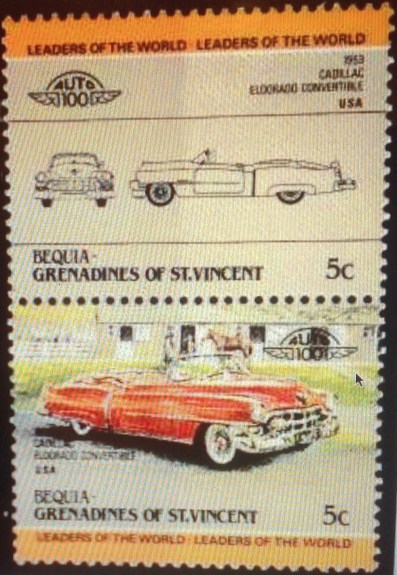 locomotive, a Cadillac … what in the world does any of this have to do with Bequia? As for the pretty butterfly stamps (see below), well, don’t they speak for themselves by now?


The 500th anniversary of Michelangelos’s birth came and went, without philatelic recognition from the United States or most other nations. For some reason, Grenada Grenadines thought it necessary and appropriate to mark the event with this stamp (right). It may have been a hit with topical collectors, but you need more than stamp tongs to grasp the connection between the long-dead Italian artist and the Grenada Grenadines — Carriacou, Saline Island, Frigate Island or the rest.
My next catalogue under review is from 1986, countries A-F. In “For the Record,” it supplies a rather short list of countries whose non-standard items appeared on the stamp market in the 1960s and 1970s: Afghanistan, Bhutan, Cambodia (Khmer), Cameroun, Chad, Comoro Islands, Congo People’s Republic, Dahomey, Ecuador, Equatorial Guinea.
Some notes on this list:

Why on Earth would Cambodia issue a stamp commemorating Interpol in 1973, when it was fighting for its life? That same year the philatelic agents honored Copernicus (see below), presumably in an effort to make a few bucks from the topical market.
** The first thing that struck me was “Cambodia (Khmer).” Were these stamps from the killing fields outside Phnom Penh? I turned to the appropriate pages in the catalogue, and found stamps issued between 1972, in the midst of the fighting, through April 1975 — the very month the Khmer Rouge entered Phnom Penh. These non-standard stamps were issued while Gen. Lon Mol was trying to hold Cambodia together in the rogue state known as the “Khmer Republic.” While southeast Asia was being bombed and bloodied, the stamps blithely paid tribute to the coming summer Olympics, the UPU centenary, Copernicus — nothing else going on around here, folks. Presumably these sets (again, no pictures supplied in the catalogue) were manufactured to be marketed to collectors, somehow. I guess it worked, somewhat. I do wonder who would want these questionable stamps from Cambodia?
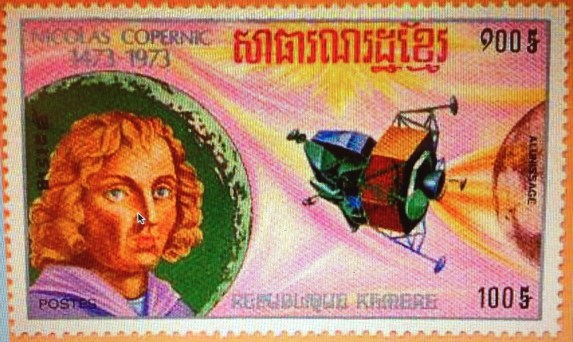
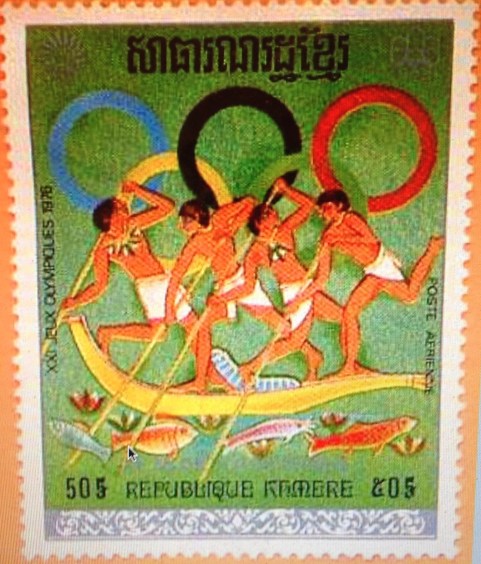
The Cambodian stamp above looks forward to the 1976 Olympic games — by which time the Khmer Rouge had sent the nation careening into chaos and genocide. (Images from the Internet.)
And by the way, what does “Khmer” mean, philatelically, in relation to the fanatical regime that came to power in 1975? Did the blood-crazed Khmer Rouge ever get around to putting out stamps during their three years of nightmarish rule and carnage? Have I asked enough questions?
Now for some answers. The “Khmer Republic” was the ethnic and civic fig leaf for Lon Nol’s military dictatorship — short-lived, as it turned out ª1973-5). As for Khmer Rouge philately, after 1975, the Swiss blogger Victor Manta sounds authoritative when he writes:
“Many people have wondered what happened to the postal system in Cambodia after the Khmer Route came to power in mid-April 1975 and subsequently renamed the country ‘Democratic Kampuchea.’ With Pol Pot at the center of power, the ultra-Maoist regime is thought by many to have caused the death of as many as two to tree million Cambodians before they were overthrown in late 1978 by Vietnamese military force.
“It is generally accepted that no postage stamps were issued by the Government of Democratic Kampuchea for domestic or international use during their control over Cambodian territory from 1975 to late 1978. The Ministry of Post and Telecommunications was ‘disbanded’ by the KR and no official of Democratic Kampuchea was assigned to oversee the tasks of post and communications during those years of abject terror.
“Collectors of Cambodian philately will be only too familiar with the gap in stamp catalogues for this period. Stanley Gibbons includes three small paragraphs headed, ‘Democratic Kampuchea,’ as follows: ‘… the discontinuance of postal and telegraphic services. In these circumstances no stamps were issued. Five pictorial stamps inscribed “Kampuchea” without indication of currency were publicized early in 1978. If they exist their status would be propaganda labels.’ (2004) …
“However, written domestic communications did take place in Democratic Kampuchea. Such correspondence was, once again, limited to the senior hierarchy of the Khmer Rouge. Written communications were hand-carried and no postmark or postage stamp was necessary, nor used, as far as is known at present.
“Communications from Democratic Kampuchea to any person or agency outside of the country was only undertaken, as far as is known at present, by Pol Pot, Khieu Samphan and Ieng Sary. No other people within the country were allowed to enter into any form of communication with the outside world.”
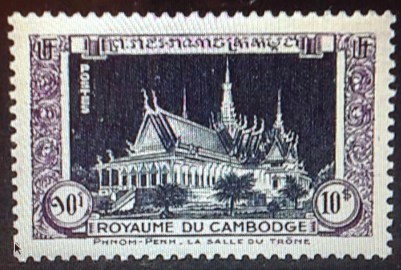 There was a time when Cambodia issued some of the world’s most beautiful stamps — delicate works of art that combined expert engraving, rich and subtle coloring, and arresting subjects. Here are some I captured in images from the Internet:


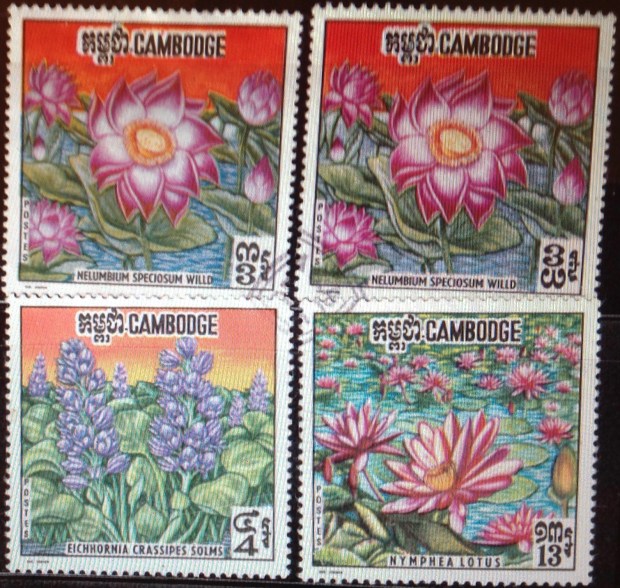


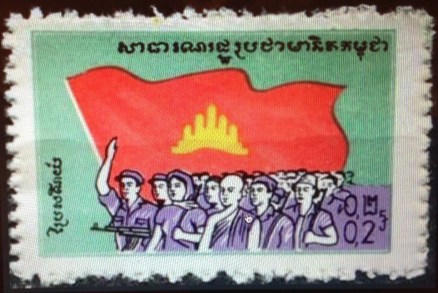
Here is a stamp issued for use in Cambodia during the Vietnamese occupation. I guess that makes it legal, if you accept Vietnam’s occupation as legal. (I give Vietnam credit for saving the country from the Khmer Rouge.) Whether legal or not, you would hardly say this stamp is beautiful, or finely made. A crude product, in my opinion, right down to the ragged perforations; nothing like the artistry of those old Cambodian beauties …
It is a small philatelic tragedy within the immense Cambodian tragedy that this stamp-producing tradition was lost entirely during the terrible years of Khmer Rouge misrule, followed by the indifferent philatelic efforts of Vietnam as caretaker of the “Democratic Republic of Kampuchea.” Today, 40 years after the Khmer Rouge were driven out of Phnom Penh, with the Vietnamese long gone as well, Cambodia still struggles to recover its philatelic equilibrium, and probably much else beyond that.

Above is Bhutan No. 1, which features a sketchy drawing of a postal runner navigating a snowy, mountainous path — quite genuine-looking, if you ask me. The stamp with the image of a tiger (below) looks like a definitive. It is listed as cancelled-to-order, which makes it only semi-legal because it was never postally used. Why are these stamps deemed spurious? Bhutan is a real country, a member of the United Nations. It is landlocked, one of the most sparsely populated nations on Earth. My guess is that Bhutan became a stamp mill — about which more anon.
** I wonder if it strikes you, as it does me, that the countries either exploiting or implicated in illegal stamp production seem to be among the world’s … sketchiest states. Bhutan? Equatorial Guinea? The Khmer Republic? I wouldn’t want my homeland to be on that list.

Which brings us back to Equatorial Guinea, one of whose stamps illustrated the opening of this essay. Before wrapping up my narrative, let me share some info from Wikipedia about the last 20 years of Equatorial Guinea’s history:
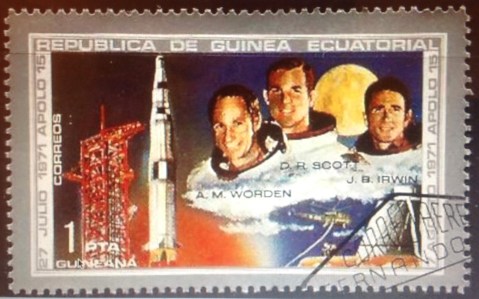
Sure, this team of U.S. astronauts is worth celebrating. But by Equatorial Guinea? While stamp agents were peddling the item to the global stamp market for topicals, the corrupt regime of President Teodoro Obiang Nguema Mbasogo was stealing the nation’s rich resources. The people still live in misery, half the population without access to safe water. Surely President Nguema — who somehow has acquired a net worth of $600 million during his 30-plus years in power — and his equally predatory cohort had other things to think about than honoring U.S. astronauts. Perhaps they figured gaudy labels like this would serve as a distraction from their dastardly rule.
“… Since the mid-1990s, Equatorial Guinea has become one of sub-Saharan Africa‘s largest oil producers. It is the richest country per capita in Africa, and its gross domestic product … per capita ranks 43rd in the world; However, the wealth is distributed extremely unevenly and few people have benefited from the oil riches. The country ranks 135th on the UN’s 2016 Human Development Index. The UN says that less than half of the population has access to clean drinking water and that 20% of children die before reaching the age of five.
“The country’s authoritarian government has one of the worst human rights records in the world, consistently ranking among the ‘worst of the worst’ in Freedom House‘s annual survey of political and civil rights. Reporters Without Borders ranks President Teodoro Obiang Nguema Mbasogo among its ‘predators’ of press freedom. Human trafficking is a significant problem; the 2012 U.S.Trafficking in Persons Report stated that Equatorial Guinea ‘is a source and destination for women and children subjected to forced labor and FC (sic) sex trafficking.’ The report rates Equatorial Guinea as a government that does not fully comply with minimum standards and is not making significant efforts to do so.”
My last catalogue at hand is from 1997. (I apologize for not consulting more recent catalogues, but for the moment, I think this one will do.) The 1997 Scott catalogue has no “For the Record” section at all.
This does not mean that the Universal Postal Union folks successfully cracked down on illegal stamps, so that today, 20-plus years later, those irritating decoys and impostors are nothing more than a historical nuisance. Sorry, folks.
More likely what it means is that the stream of bogus stamps to entice collectors to part with their money has become a flood I don’t blame the editors at Scott if they no longer feel inclined, obligated or generally in the mood to confront the whole distasteful topic. I can hardly stand to go on myself. Just one more part, soon to come, and then I’ll be done and eager to move on to uplifting and interesting stories about stamps — legal stamps!
TO BE CONTINUED






 was due to end in just 15 minutes. To my surprise and puzzlement, there were no other bids. Has this one escaped others’ notice? I would have to think fast. OK, $79 is not a king’s ransom — and look at the prize! The image was a little slanted and out of focus, but I could see no major faults, There was also an image of the back of the stamp, which looked clean. All the perforations seemed in good order. Did the seller not know what he/she was doing? The cancellation did nearly black out the faint lettering of the word “FIVE” — but then again, the clearer letters below spelling “POUNDS” announced a plural denomination, and the set only has a L1 and a L5. This looks like is a great opportunity — a once-in-a-lifetime chance. Better take it. …
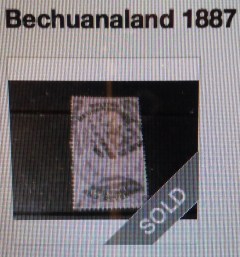 I now discovered, with a sinking feeling, the seller’s hometown: Bryansk, Russian Federation. (How often had I been warned against doing philatelic business with the Russians!) Bryansk (I looked it up) is a city of some 415,000 souls located 235 miles southwest of Moscow. I’m sure there are many fine people living there. Probably some gangsters and brigands, hustlers and hackers, too. I just hoped “brikol2” was one of the fine people — one who didn’t know, or care to know, the true value of this item — in which case, I suppose, I would be taking advantage of him/her. Which kind of puts me in the wrong, I guess. Hmmm. Another alternative: The stamp was stolen by a Russian gangster and is now being tossed into the international market place as a piece of hot philately.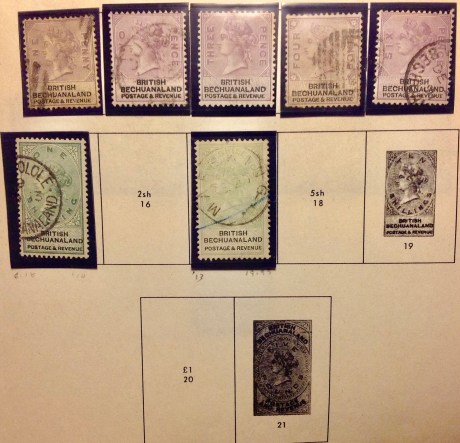
 for being so suspicious. Just because the seller is a Russian, you jump to all these lugubrious conclusions. How narrow-minded. How provincial. In the morning, you’ll see. Everything will work out. You’ll pay, the stamp will arrive in good time, and it will become a centerpiece of your collection, a remarkable gem amid your estimable Bechuanaland holdings, and a dazzling conversation starter for many a year. Of course, there will always be something of a cloud over the transaction, involving questionable provenance and lack of authentication … Oh well, (yawn) …
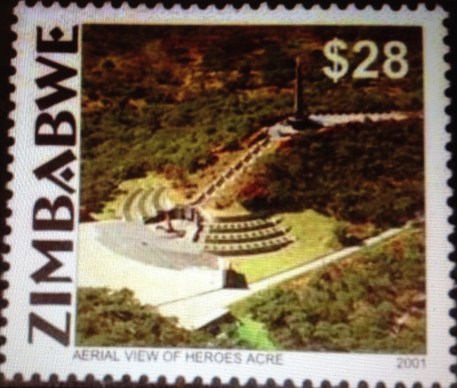 The Heroes Acre is a landscaped monument and cemetery covering 57 acres just outside Harare, capital city of Zimbabwe. Built as a gift from North Korea to President Robert Mugabe in 1981, it is modeled after a similar memorial near
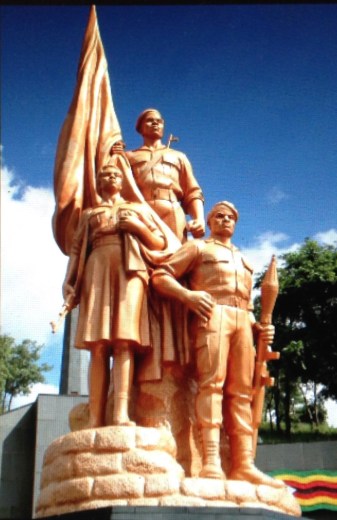 rifles’ magazines. At the center of the cemetery is the Statue of the Unknown Soldier, with three fierce soldiers, including a woman, who look like a cross between Zimbabweans and North Koreans, and who are armed to the teeth with rifles and a grenade launcher.
 At first I didn’t connect the stamp
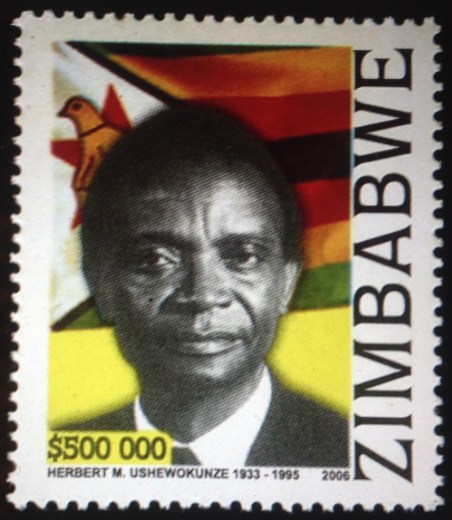 A medical doctor and founding member of ZANU, Herbert R. Ushewokunze (1933-1995) served in Mugabe’s first cabinet and was a strong supporter of the president, echoing and even overtaking his fellow nationalist in his radicalism, which he laced with rhetorical flourishes and references to Shakespeare. As health minister, he led the campaign to end race-based segregation in health facilities. He accused white doctors and nurses of racism, and pressed for traditional African forms of treatment. Within a year he fell out with Mugabe. He accused the Public Service Commission, which Mugabe used to control the civil service, of still favoring whites, which offended the president. Even worse, he called for an end to nepotism in the commission, which Mugabe was using to reward his loyal followers. So Ushewokunze was sacked without explanation, and spent his final years out of power. Today, Zimbabwe’s health system barely has a pulse. Perhaps Ushewokunze could have done better than his successors; he surely could have done no worse.
 Now here is a model hero I’d like to admire. Leopold Takawira (1916-1970) did so well in primary schools in Southern Rhodesia that he went on to become
 By contrast, Nathan Makwirakuwa Shamuyarira (1928-2014) is an exemplar of the kind of rascal Mugabe kept in his inner circle. By the 1950s Shamuyarira had completed his education (with studies at Princeton) and become active in liberation politics, calling for black African self-governance. He showed lots of promise. He was a leader before independence in groups including the Capricorn Society, the group that in the 1950s envisioned an interracial partnership for Zimbabwe. After independence, he joined Mugabe’s cabinet and served
 Herbert Wiltshire Tfumaindini Chitepo
  Grace Mugabe deserves at least a paragraph or two in this mostly uninspiring tale. Not because she is, or was, a Zimbabwe heroine. I don’t think she has been memorialized on a stamp, and she’s not ready for Heroes Acre. Rather she should be known for her audacity, her mendacity, her tenacity and her larceny. Robert Mugabe plucked her from his secretarial pool well before his wife Sally got sick and died. Grace was
 Grace Mugabe picked the wrong rival, however, when she took on vice president Emmerson Mnangagwa. I have no idea how he did it, but Mnangagwa managed to outmaneuver the First Lady, and recently was sworn in as Zimbabwe’s second president since 1980. Subsequent reports placed Grace and Robert Mugabe in Singapore. They reportedly have as much as $1 billion in loot stashed in Switzerland and elsewhere.
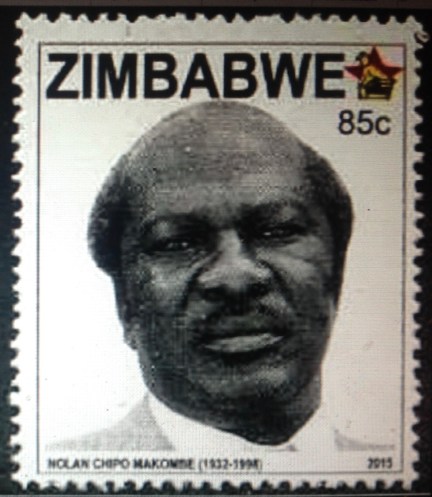 One more story: Like many other of his compatriots, Nolan Chipo Makombe (1933-1998) found his way out of his rural region of Masvingo through mission schools. He studied radio and TV technology in South Africa, then taught school, ran a radio shop, and worked for the colonial government as a radio mechanic. He grew active in nationalist politics, and was detained by the colonial rulers in Salisbury for extended periods. After independence he was elected to parliament, representing Masvingo province. He remained a leader in the legislature, eventually serving as speaker of the house. He died of a heart attack in 1998, and was buried in Heroes Acre.
 Before I end this sorry history and dismal speculation, let me sound a clarion call from the past. It involves a white, English-born patrician named Arthur Guy Clutton-Brock. His story provides a poignant coda
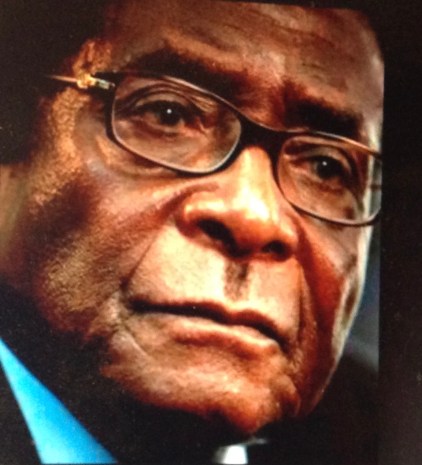 This essay is about stamps, I promise you. Or at least it includes stamps. When you set to writing about Zimbabwe, however, you have to start with Robert Mugabe.
 not enough to buy a loaf of bread, so six months later came a $100 trillion bank note, The currency soon collapsed;
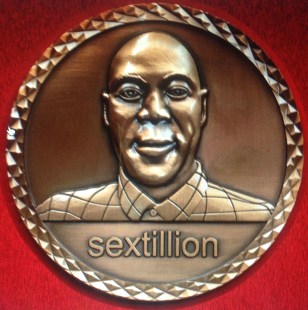 whatever work force there is makes up an
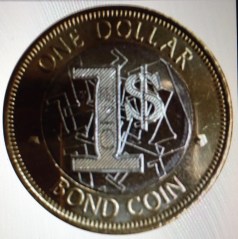

 Earlier this year, according to Australian site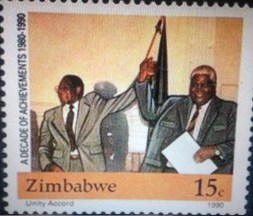
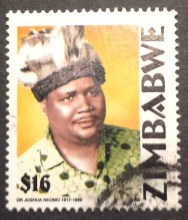 Don’t look here for a detailed sketch of Robert Mugabe or his former rival, Joshua Nkomo. Their stories are well-known. In Mugabe’s case, the story is one that will leave a mark of infamy for the ages.
  Nkomo, the hapless representative of the Ndebele minority tribe, plays only a minor role in the drama. He gave up his opposition role and joined Mugabe’s corrupt regime as a minor partner. I don’t know if he managed to siphon off any of the millions flowing into Mugabe’s accounts over the years. He made his pact, sold his soul, and probably should have cashed in. In which case, he ended up being just another rascal.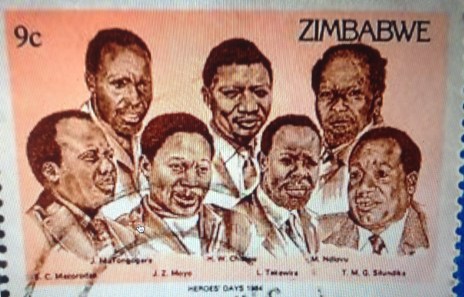
 While working to build my collection of British Somaliland stamps, I came across a previously unknown-to-me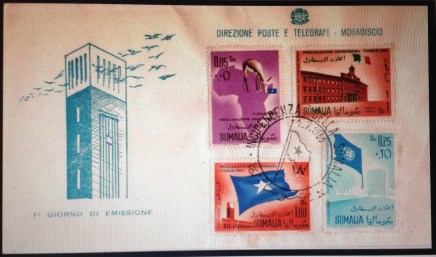

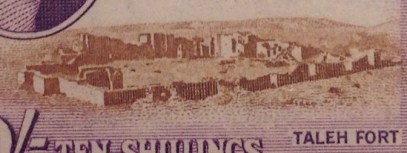 million pounds. Britain’s main concern from the outset was quelling the Dervish uprising — a latter-day incarnation of today’s Islamic State or Taliban. Once the insurgents were
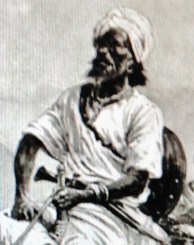 decisively routed in 1920, after a daring aerial attack on
 Somaliland continued as a sleepy, largely barren outpost
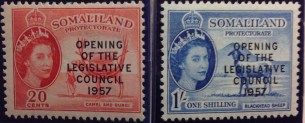

 philatelic scholar explains: “Postage stamps continued to be produced illegally internationally during the war, although their subject matter suggests they were designed for external collectors.” (For more on this distressing phenomenon of stamp mills producing fodder for topical collectors with no real connection to the nominal country of issue, see FMF Stamp Project blog posts of February 2018, “Cinderellas: A Spreading Stain”; and March 2018,
  Before I close, a word or two (or more) on the postal history accompanying this civic narrative. The first postage stamps from the Horn of Africa were the British
 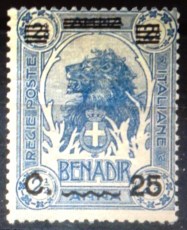 India overprints that began in the 1880s. Italian authorities came out with stamps from “Benadir” starting
 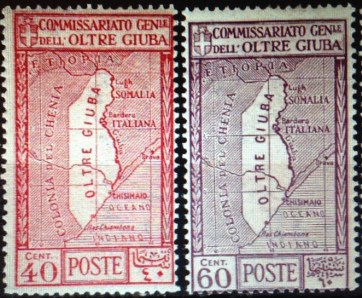 in 1903, then “Oltre Guiba” (Jubaland) in the 1920s, then simply Somalia or Italian Somaliland. The neighboring French started issuing stamps from “Obock” in the 1890s, then the
  French Somali Coast (Cote Francaise des Somalis) after the turn of the century. In the 1960s it was renamed the French Overseas Territory of Afar and Issas, before becoming independent Djibouti in 1977.
  And so the nations come and go. Sic transit gloria — except that in the Horn of Africa, there wasn’t much glory in the region’s imperial past, and there seems to be very little to celebrate in the struggles of today. But speaking of Afar and Issas and stamps, I must
 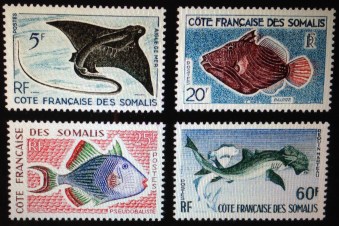 say that nation issued some ravishing, over-size, multicolor engravings.



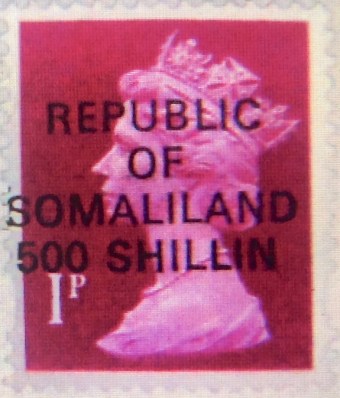
 Here are some more stamps from British Somaliland. While King Edward VII was on the throne (1902-11), the area was declared a protectorate. It remained that way through the reigns of George V and George VI (see stamp at right), then on to Elizabeth II and independence in 1960.
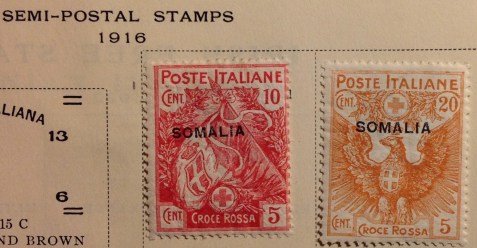 Philately from Italian Somaliland began humbly enough, with overprints of stamps from the motherland. (right)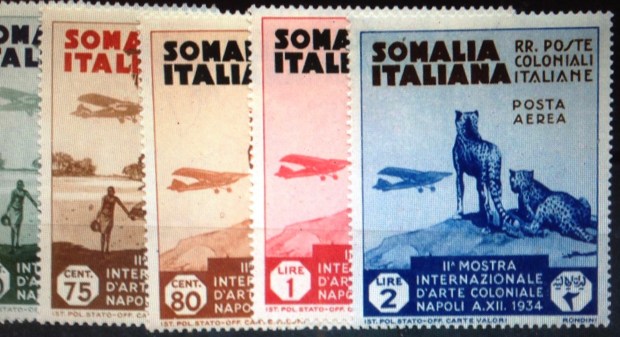
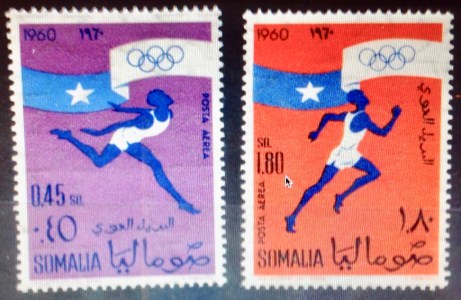
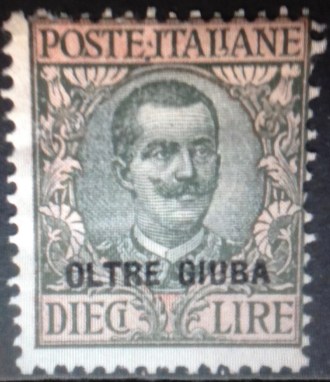
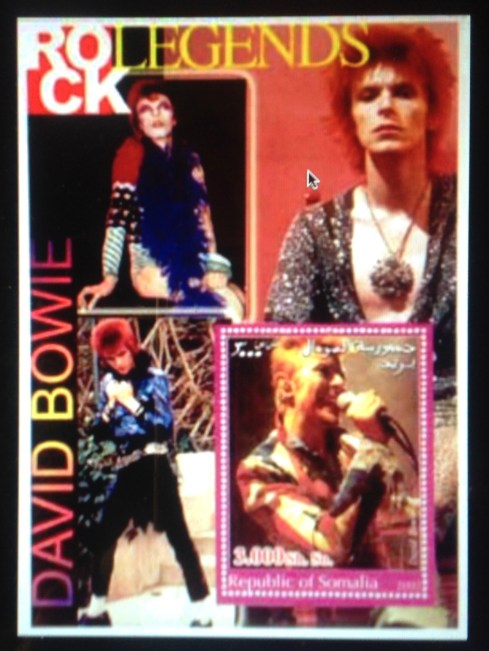


 Herewith a running commentary on the stamps as they arrive.

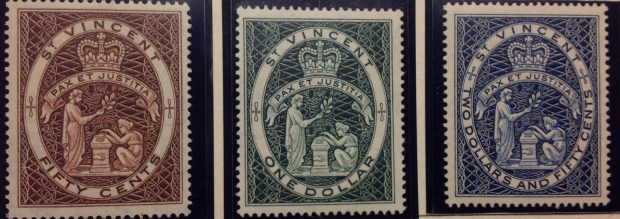
 The Seal also appears in these next stamps, from the Edwardian era. There are three distinct “sets” using this design, which differ in such details as the inscription on tablets below the figures — and whether or not there is a “dot” in the numeral lozenge. Some of these stamps are quite costly. I paid a few bucks for the ones pictured here.
 These George V definitives are from two long sets that differ only in watermark: One set has a “multiple crown and CA” (for Crown Agents) watermark; the other carries the “script crown and CA” watermark. Ah, watermarks! The bane of my existence (along with perforations), which I suppose I shall have to write about sometime …
 Here is also a pretty 1-cent definitive from the George VI decimal series. It only cost me a dime, and it fills one of the few remaining holes in a long set that, when complete, will be spectacular!
 First, notice the envelope from Arizona. Somehow, a 10-centime stamp from French Guiana in the 1940s is stuck next to a standard “forever” stamp honoring the bicentennial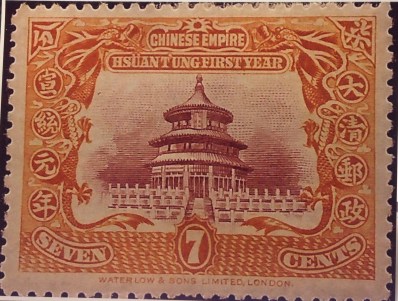
 Now, here’s a coincidence. Take a look at the second envelope that arrived today. It presents a small array of common U.S. postage stamps of the recent past, a
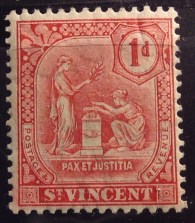
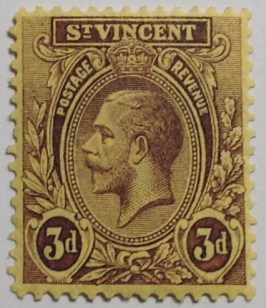
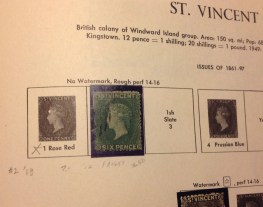
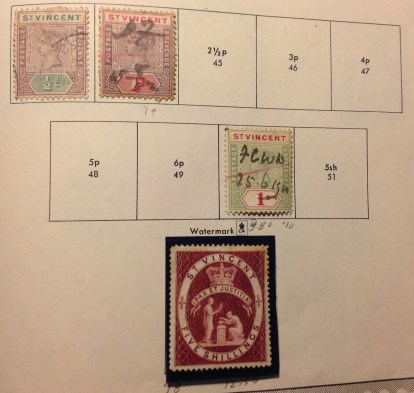
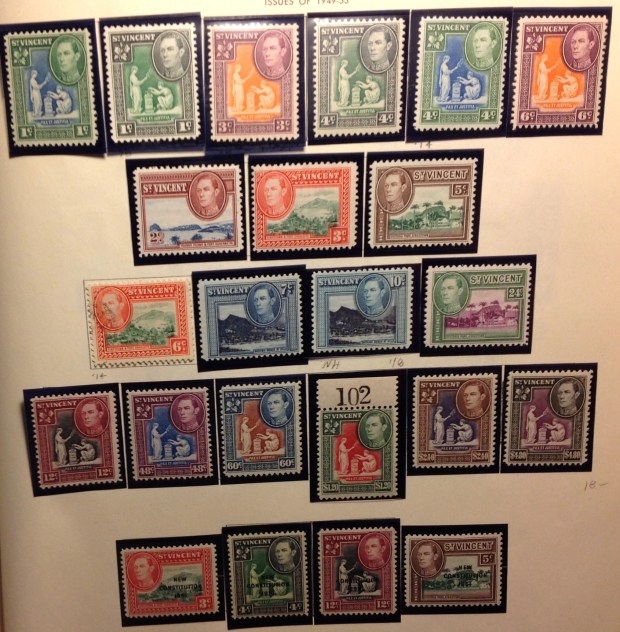
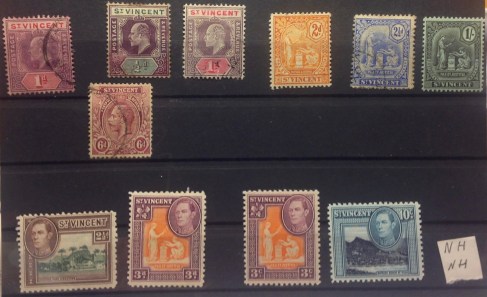 As you will notice on the stockcard (right), where I have arranged them temporarily, this new batch of St. Vincent stamps includes definitives from the reigns of Edward VII, George V and George VI.


 Last loose-end tie-up: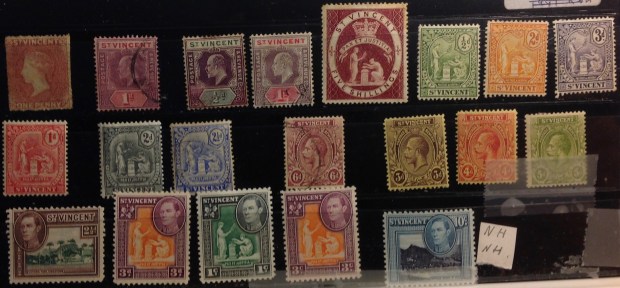



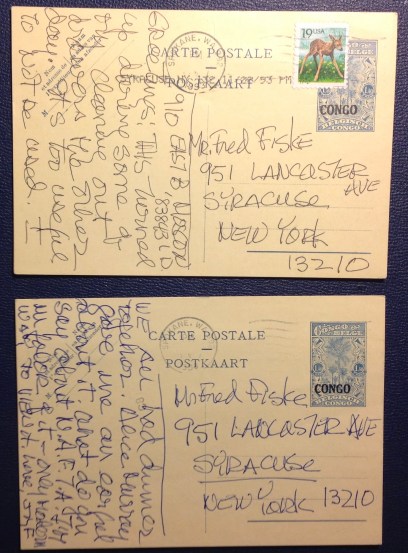 cards and letters
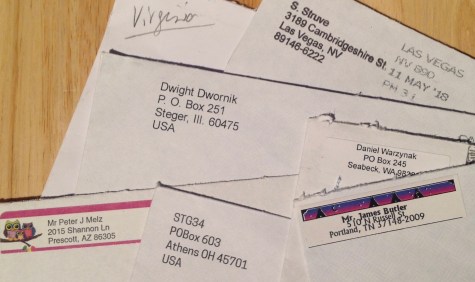 Way to go! In following days, I received a delightful philatelic cascade of seven envelopes. As it happened, each letter was from a different state: Virginia, Washington, Tennessee, Ohio, Arizona, Illinois and Nevada. This was pure coincidence — I was not trying to set a record for sellers in different states, just trying to fill out my Bechuanaland and Somaliland collections. What does this diversity suggest? For one thing, that stamp-collecting is deeply embedded in the U.S. heartland. At least, a lot of folks with stamps they want to sell are living all over the country. Maybe they are selling off their stamp collections, or just having fun in retirement. Maybe some of them are still collecting — selling some stamps and buying others. I received this poignant note from one seller: “Fred, Thank you for your order. Please keep checking. Every stamp I sell from my collection helps my family buy things we need to get by. May God bless you, Gregory.”
 Here’s how I handle my cache of new lots. First I slice the envelopes with my letter-opener, draw out the contents, spread them out on my desk and admire the resulting philatelic clutter. I harvest the colorful stamps the sellers pasted on the envelopes for postage, and stash them in the large envelope I use for such accumulations.
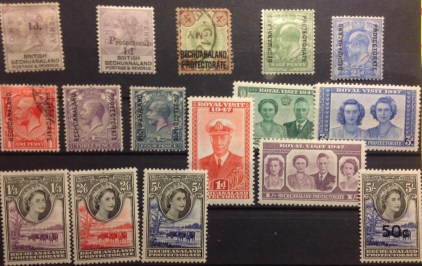

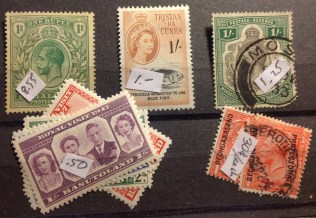
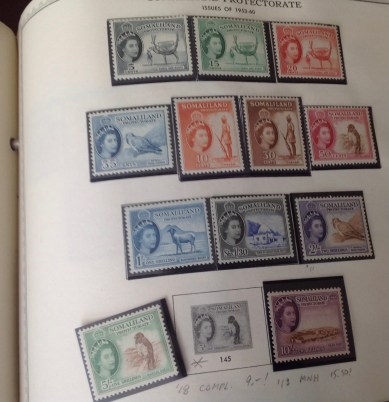
 That’s how my latest buying binge started. I spotted a long-desired stamp — the 5 shilling from the first (and only) Queen Elizabeth set of Somaliland Protectorate, a small territory formerly under British supervision in the Horn of Africa. It’s a charming little stamp, a two-color engraving, emerald green and brown, issued in 1953. The young queen’s portrait sits next to a delicately etched Martial Eagle perched on a promontory in a rocky landscape. I recently acquired the 10 shilling of the set, and lacked only this stamp to complete my series. But the stamp is not cheap — prices on the Internet range upward from $11 to $28 for a mint copy. So when I noticed it in a “sale” email, going for $9.50, it got my attention. Not only that: The seller added to his pitch the phrase “…or best offer.” Plus, shipping was free. I shaved 50 cents off the asking price and submitted my offer for $9, which was promptly accepted. (How low should I have gone?) Hooray! My set would be complete.

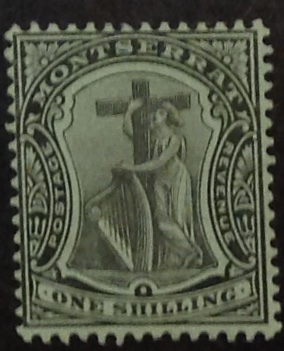
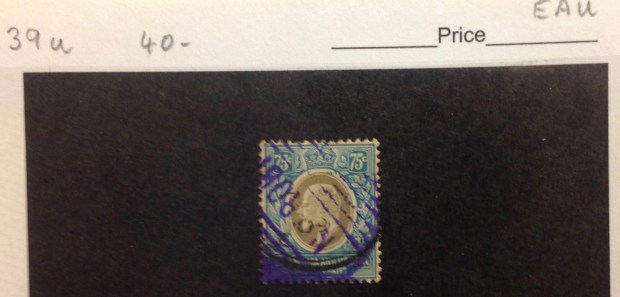




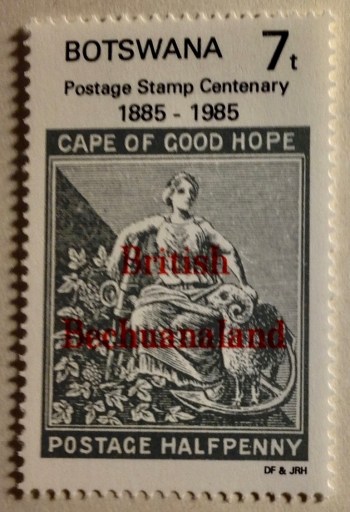 Although I am not a “topical” stamp collector, there is one “topic” I have a soft spot for — stamps on stamps. For some reason, the framing of a stamp-within-a-stamp holds special appeal to me, like a trompe l’oeil painting by William Hartnett — a philatelic diorama; not to mention that the reproductions of early stamps are usually very fine on these commemorative issues. I have quite a few of these stamp-on-stamp issues, and would be glad to share them in a post if you wish.
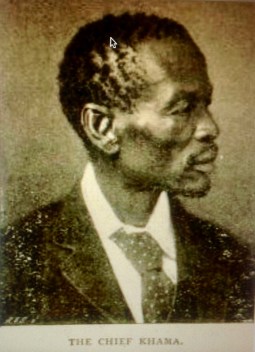 Khama rightfully deserves a biography of his own — indeed, the first account of his life was written in the 1880s, when the king and his entourage visited London to lobby for British protection from the Boers, the Ndebele and expansionists like Rhodes. Khama enjoyed an audience with the queen, and drew enthusiastic crowds at receptions sponsored by evangelical groups who applauded Khama’s conversion to Christianity and promotion of “civilized” values like education, modernization and monogamy.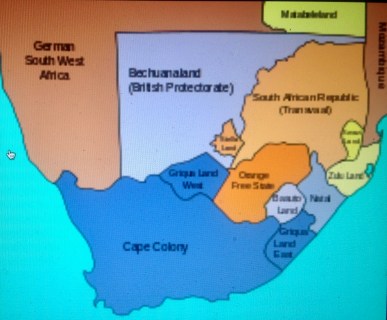
 South Africa or Rhodesia. But Khama and his colonial protectors would have none of it. Thus it was that Bechuanaland Protectorate was spared the blight of apartheid that settled on South Africa after 1948. Those living in the southern portion of the Tswana ancestral lands eventually were consigned to the hollow South African “homeland” of Bophutatswana, one of the last concoctions of the apartheid state in the years before Nelson Mandela ushered in the new South Africa in 1994.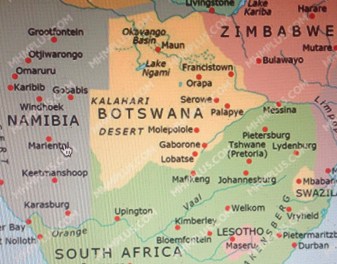
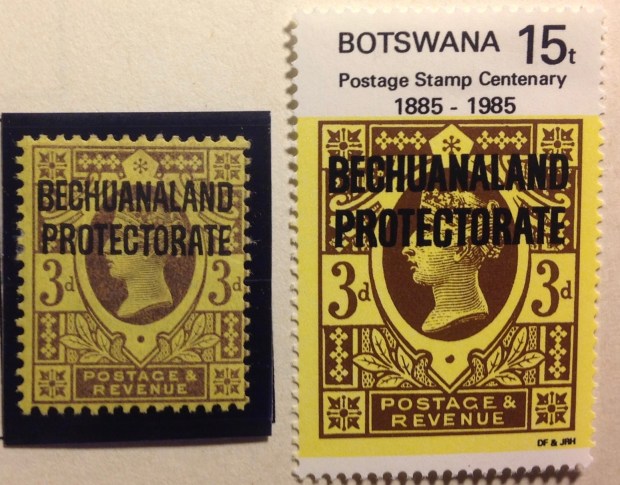



 There is a fairy tale quality to the story as well — how in 1948 Seretse Khama, then a dashing young law student and tribal prince in London, met Ruth Williams, a white English girl. The couple fell in love. After several months Khama proposed and Ruth accepted. There was a predictable uproar over this
  interracial courtship — from the church, from the colony, from the tribe. Just about everyone was against the marriage — except Ruth and Khama. The butt-inskis even persuaded the vicar to cancel the ceremony on the morning of the wedding — but the good cleric reportedly found a way to sneak it in after an ordination ceremony at the cathedral later the same day. Khama then faced the combined wrath of peers and mentors. “I still want to be your chief,” he told his people. He also declared: “I cannot leave her.” The couple was compelled to live in exile for six years (in England, naturally). Eventually Khama and his bride were allowed home — after he renounced his throne. He arrived to a hero’s welcome in 1956. Kwama was elected Botswana’s first president in 1966, and served with distinction for more than three terms. The couple had four children. Sir Seretse Khama died in 1980, Dame Khama in 2002. Their romantic saga unfolds n the movie, “A United Kingdom,” released in 2016.
 U.S. president — also the son of an interracial couple — be remembered as America’s Khama?
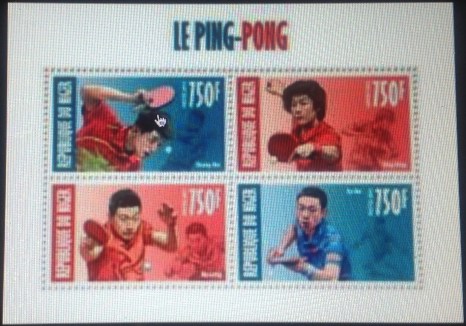
 “legal” issue? How can the average collector distinguish one from the other in this philatelic hall of mirrors?
 Perhaps the editor need not have worried. Natural market correction serves the interests of philately. By 2009, it seems, most countries were well below 200 in new stamp issues for the year. They may have discovered the diminishing returns of
 This, in a country with “poor economic performance,” “a fragile security situation,” “lack of infrastructure,” and so on. Indeed, what was Liberia thinking?
 issuing countries!”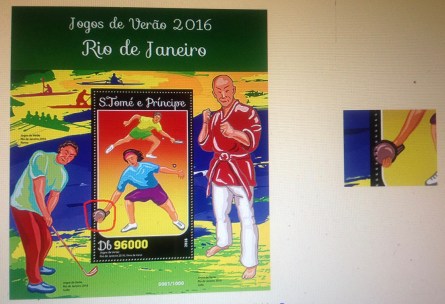


 FMF STAMP PROJECT