Mark Twain called rumors of his death in 1897 “an exaggeration.” Other predictions of the demise of one thing or another also have been exaggerated: that radio would mean the death of conversation; that TV would eclipse radio; that the Internet would sound the knell for newspapers, reading, writing, thinking, whatever. It hasn’t happened yet. (Granted, newspapers aren’t what they used to be; and Mark Twain did eventually die, in 1910.)
What about the decline of stamp-collecting? Rumors that philately is on its last legs (last hinges?) have been circulating for years. There are just too many distractions in modern living, it is said — the Internet, TV, video games, extreme sports, social
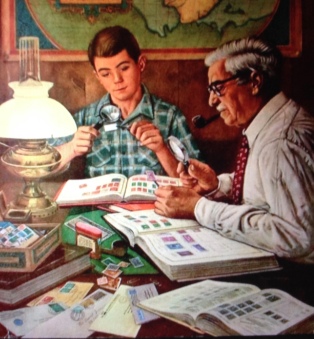
- This quaint image depicts the intergenerational ritual of philately. Today’s father probably is immersed in Facebook, or cable sports, while Junior is burrowing ever deeper into games and social media — none of which have anything to do with stamps. To which I say: so what?
media, what-have-you; the older generation of stamp collectors is dying off; the younger cohort is just too busy to keep up with their parent’s hobby; as for the kids, who knows what they’re into these days — certainly not stamps … or newspapers; life is just too fast-paced for that dry, sedentary, pokey hobby; besides, there are just too many stamps coming out these days, there’s no way to keep up; plus, hardly anybody still uses stamps — they don’t even exchange letters, for goodness’ sake! How can you collect something you don’t even know exists?
I’m here to tell you different. At least, that’s my mission — whether it’s a fool’s errand, a Quixotic quest, a blind alley or some other metaphor for a doomed itinerary. That’s what the FMF Stamp Project blog is about: I’m on a mission to save stamp-collecting — single-handedly if necessary!
Actually, I suspect stamp collecting will survive, with or without help from the FMF Stamp Project. If philately is such a dying hobby, how come I get stamp auction pitches via email where the bidding is fierce? LIke, 22 bids for one item! I joined the fun the other day, staking a claim to two lots. One of them I managed to win but on the other, I was finally outbid and lost the lot.
The latest tolling of the bell for philately comes from Eugene L. Meyer, in an op-ed column for The New York Times a few weeks ago entitled, “Stamped Out.” (https://www.nytimes.com/2017/09/29/opinion/stamp-collecting-philately.html?emc=eta1) Described as a journalist and author, Meyer obviously is not a stamp collector — or at least, is no longer a stamp collector. I detected neither smoke nor spark of the phire that burns in all true philatelists.
He describes his years as an active hobbyist in his youth, when stamp-collecting was still a mainstream pastime. He earned a merit badge for philately in the Boy Scouts. He collected foreign stamps off envelopes saved by a friend of his father’s. He collected first-day covers and plate blocks of new U.S. issues, and checked out “dealers who would advertise in the back pages of comic books” and send packages of cheap stamps “to get you hooked.”
Meyer recalls the days when just about every high school had a stamp club. It made me remember when department stores had counters, with colorful and exotic displays under glass for old and young stamp enthusiasts to pore over.
Today the stamp clubs are mostly gone, as are the stamp counters — and department stores, come to think of it. The legions of young stamp collectors grew up, their collections all but forgotten. “Stamp collecting could be addictive, and for many in my generation it was,” Meyer writes. “But there comes a time to let go of childish things, and the stamps, plate blocks and first-day covers I collected in the 1950s had sat in the box in the basement for too many years, unlooked at, unattended to …”
While I bridle at the suggestion stamp collecting is a “childish thing,” I understand what Meyer is getting at. I, too, found little time for the hobby during my active years of career, marriage, parenting, navigating through it all. But I never lost my enthusiasm — adult enthusiasm — for stamps.
Am I an outlier? Meyer’s limited research suggests — maybe. His sources told him that the average stamp collector today is between 65 and 70 (I am 69, so if I’m not an outlier, I’m an over-the-hiller); and that membership in the American Philatelic Society has declined by 50 percent over the past 20 years, from 56,532 to 28,953. (I admit I dropped out.)
When Meyer went to sell his collection, one of the dwindling number of active stamp dealers told him there is no market for his common stamps; the dealer wouldn’t even make an offer. Instead, he suggested Meyer donate his collection to a volunteer group that sorts and sends stamps to veterans hospitals and homes. Which he did.
At least that counters the assertion that stamp collecting is “childish.”
In a rapidly changing world, is there still a place for stamp collecting? Of course. There are challenges, to be sure. Stamps may be coming out faster than anyone can collect them — as many as 17,000 a year, worldwide. Meanwhile, paradoxically, a new generation barely knows what a stamp is any more. What’s wrong with this model?
Stamp collecting, like the world, is changing. Great stamp rarities continue to command record prices at auction. Stories about
- George Bernard Shaw, among other luminaries, was an avid stamp collector.
stamps may not often find their way into mainstream news reports — except for occasional gloom-and-doom predictions like those in Meyer’s column. But stamp stories are just as revealing, entertaining, historically relevant as ever. The stamps are authentic artifacts, many of them exquisite works of art and design. And the older ones are getting rarer every day.
In his piece, Eugene Meyer invokes the spirit of Franklin Roosevelt, citing his lifelong passion for philately as an emblem of the hobby in its heyday. FDR, who could rest his useless legs 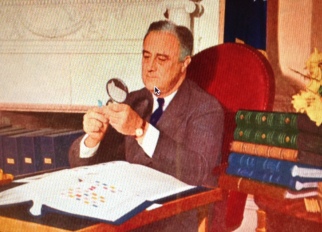 while he soared into the imaginative realms of his magnificent stamp collection, once said, “I owe my life to my hobbies — especially stamp collecting.”
If philately really is dying, I wish it would hurry up, so when prices collapse I can pick up some real bargains. However, I suspect that while stamp collecting will never recapture the dominant position it once occupied among hobbies. there will continue to be enough enthusiasts in this generation, and the next, to keep alive the fascination with those colorful specks of paper that tell so much.

 1. When this Bolivian postage stamp map (right) was first issued, in 1928, it caused an uproar in neighboring Paraguay. The two nations had been having a long dispute over the semi-arid, sparsely populated Chaco region. Paraguay and Bolivia, both land-locked, were among the poorest nations in South America. This postage stamp for the first time boldly named the territory that would extend Bolivia’s southeast border, “Chaco Boliviano.”
 A year earlier, Paraguay had established its philatelic claim to the Chaco, a region that constituted about 40 percent of its northern land mass. A Paraguayan stamp in 1927 (right) displayed a corresponding map with the label Chaco Paraguayo (you can just make it out underneath the “Paraguay” banner.) The very next year, Bolivia would “occupy” the Chaco, philatelically speaking. The battle was on! Bolivia kept laying it on, reissuing its design in 1931, the year before the fighting began. Its last map stamp with the Chaco Boliviano inscription was issued in 1935, the year the two sides agreed to a cease fire.
 Postal officials in Paraguay countered the Bolivian affront with more stamps, this one at right a bit larger than the offending ones, with a map that clearly labeled the disputed territory as Chaco Paraguayo. To drive home the point, the stamp carried a legend at the bottom: Ha sido, es y sera (“Has been, is and will be”). As if that weren’t clear enough, the message continued on a pair of shields: El Chaco Boreal / Del Paraguay. (boreal means “northern”)
 In the bitter fighting, Paraguay eventually took control of much of the territory, and a ceasefire was reached in 1935. But it was not until 1938 that a truce was negotiated and signed. The agreement awarded Paraguay about two-thirds of the Chaco. That nation followed up with a series of self-congratulatory stamps celebrating the accord. One stamp (see right) really rubbed it in: A map pointedly emphasized Paraguay’s territorial dominance, and was accompanied by a suitably smarmy quotation, “Una paz honoroso vale mas que todos los triunfos militaries” (“An honorable peace is worth more than all the military triumphs”).
 lower stamp depicts a dreaded U-Boat slicing its way through the sea under a corona of sunbeams, while a ship burns in the background — presumably its enemy prey. British? American?
 helicopter clearly labeled, “U.S. Army.” In the stamp below it, a U.S. B-52 explodes, hit by ship-to-air artillery, while another flaming jet in the background plummets to the Earth.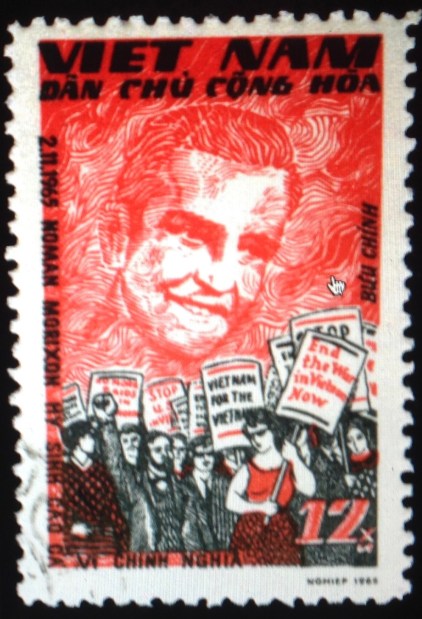





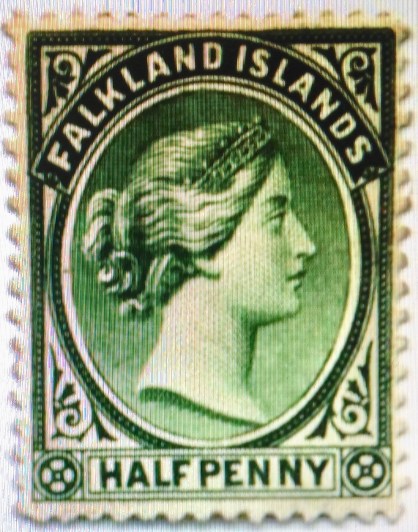
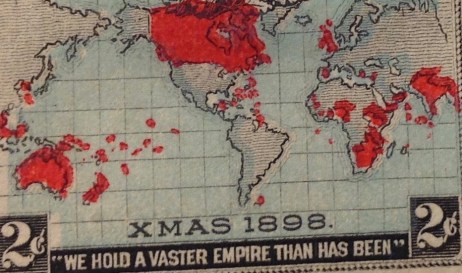
 its place in the imperial constellation.


 FMF STAMP PROJECT